

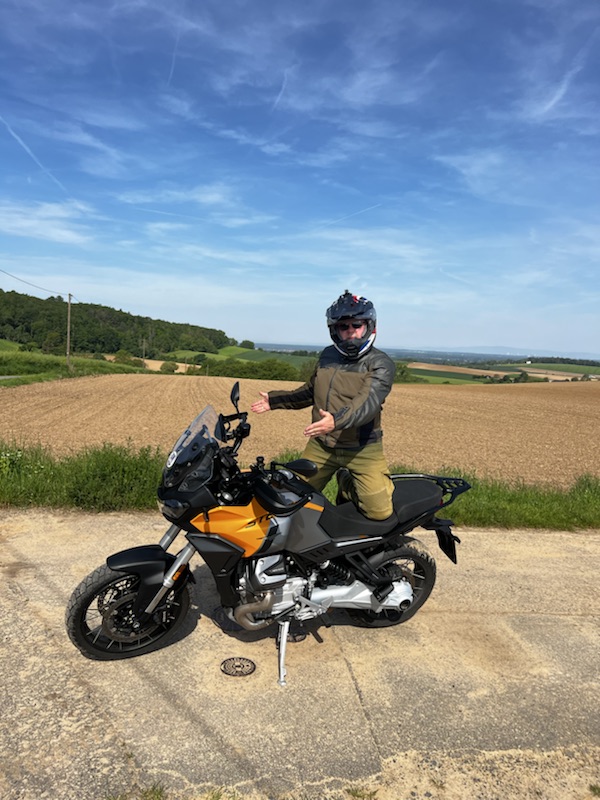
Moto Guzzi Stelvio im Testgespräch
Stelvio, ein Name, der in den Köpfen der Motorradfahrer ebenso präsent ist wie der bewährte längs eingebaute V2-Antrieb der Maschinen aus Mandello de Lario. Emotionen pur sind damit verbunden, denn sowohl der Pass mit seinen berühmten 48 Kehren in den Ortler Alpen als auch die neue Moto Guzzi Stelvio 1000 wecken jede Menge davon. Doch im Gegensatz zu ihrer optisch etwas zu sehr polarisierenden Vorgängerin, die sicherlich auch sehr gut gefahren ist, ist die neue Stelvio gefälliger anzusehen, ohne dabei ihre Eigenständigkeit im Feld der Reiseenduros zu verlieren. Doch Optik allein verkauft bekanntlich alleine noch kein Motorrad, also rauf auf den Sattel um die Qualitäten der Stelvio auf der Straße herausfinden.
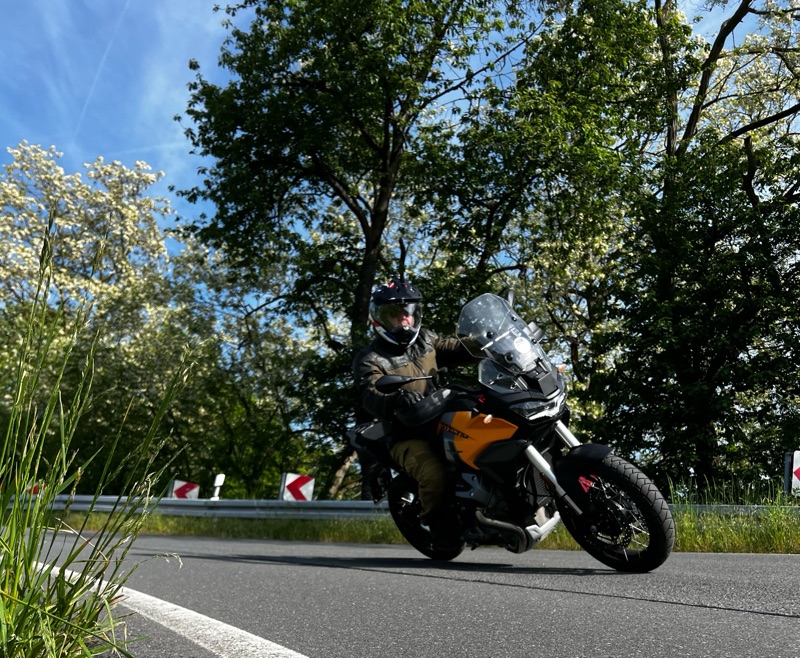
Die Stelvio 1000
Ein Druck auf den Startknopf und der mächtige V-Zwei erwacht zum Leben. Und das mit einer Vehemenz und einem Sound, dass man im ersten Moment kaum glauben mag, dass die Maschine eine Euro-5-Zulassung hat. Gleichzeitig erwacht mit dem Motor aber auch der Spirit Moto Guzzi, den so viele treue Anhänger und Fans der Marke über Generationen schätzen und lieben gelernt haben. Ja, die Stelvio lebt und bebt, und so soll es auch sein, liebe Leserinnen und Leser. Der leichtgängige und gleichzeitig hydraulisch betätigte Kupplungsgriff ist gut zu erreichen, ‚Klonk‘ der erste Gang sitzt im noch kalten Getriebe und die Fahrt geht los. Bis zum Erreichen der Betriebstemperatur zeigt der 1042 ccm große Antrieb noch etwas deutlicher seinen Charakter, danach werden sowohl die Schaltvorgänge als auch der Motorlauf geschmeidiger, aber bitte Freunde, man vergisst nie, was man hier gerade fährt und aus welchem Hause sie kommt und das ist großartig.
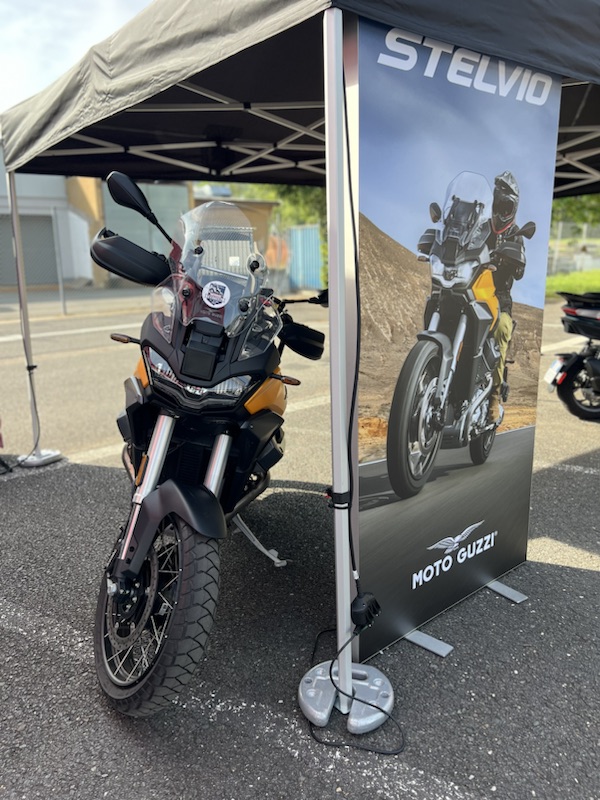
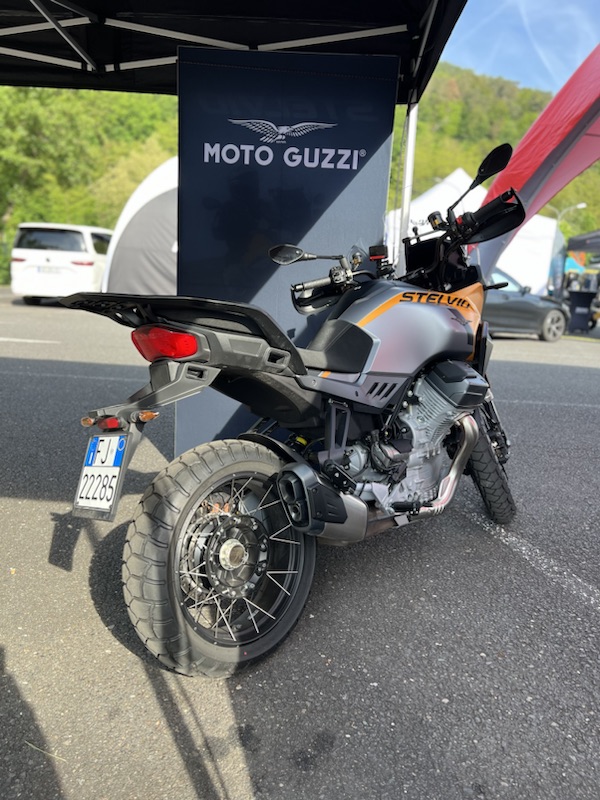
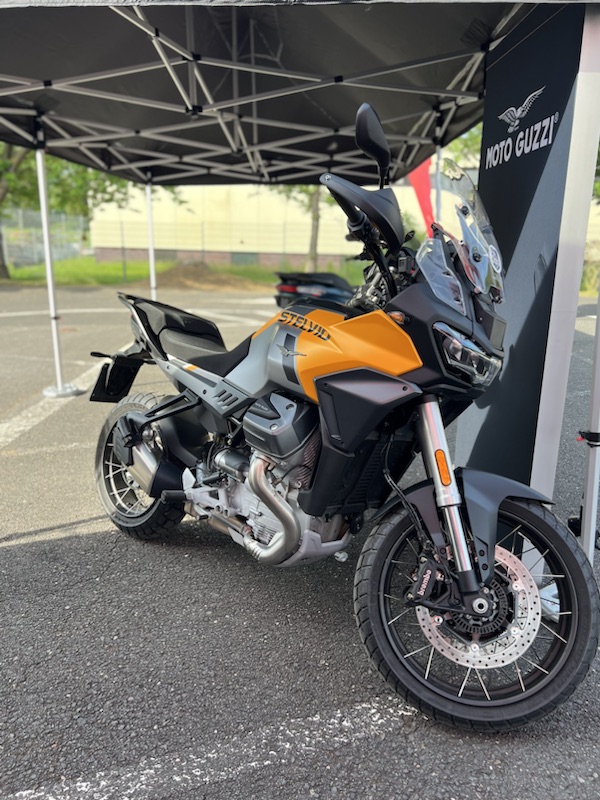
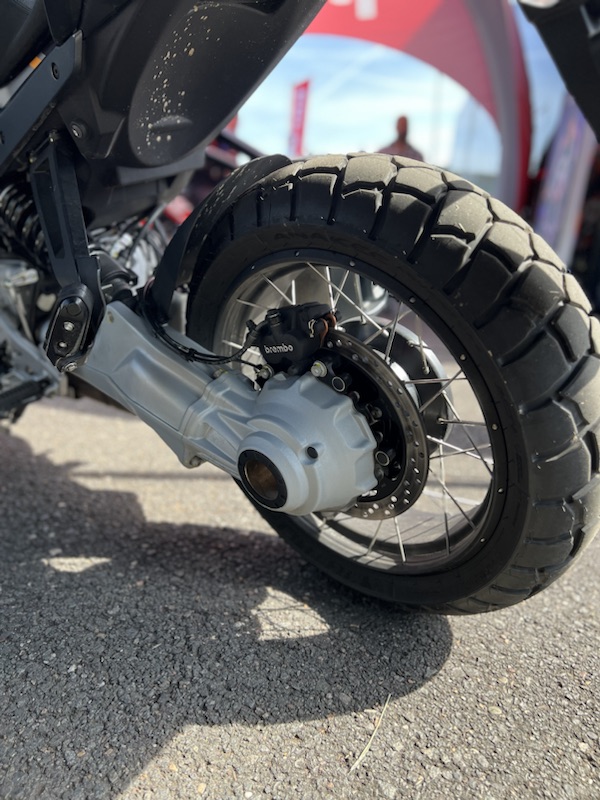
Zwei Abbiegungen geht die Tour raus aus dem Ort und auf der Landstraße kommt die Stelvio erst richtig in Fahrt. Leider ist die von mir gefahrene Maschine nicht mit dem aufpreispflichtigen bidirektionalen Quickshifter für runde 200 Euro ausgestattet. Aber auch konventionell flutschen die Gänge ungemein flink durch das Sechsganggetriebe und lassen bei 6500 Umdrehungen das maximale Drehmoment von 105 Nm auf das Hinterrad los. Die Maximalleistung von 115 PS kommt etwas später, nämlich bei 8500 Umdrehungen zum Tragen. Natürlich, und wie sollte es bei Guzzi auch anders sein, überträgt der Motor seine Kraft über einen stabilen Kardanantrieb auf das Hinterrad. Gegen groben Unfug und zu viel Drehmoment schützt eine mehrstufige Traktionskontrolle. Sie arbeitet ähnlich wie das Kurven-ABS und das PFF Rider Assistance System versteckt im Hintergrund.
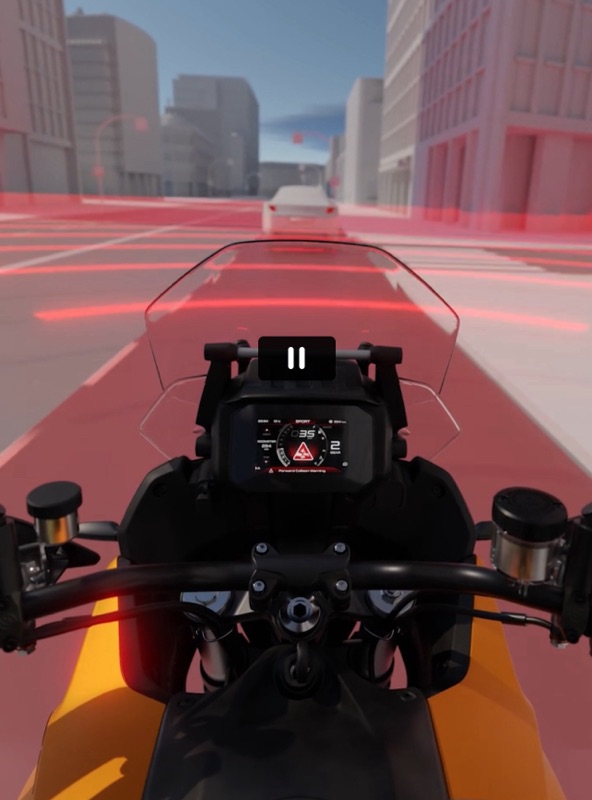
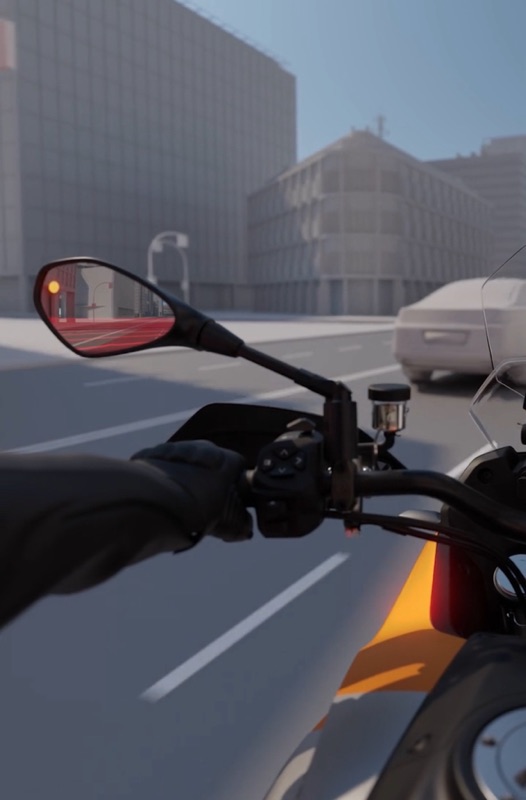
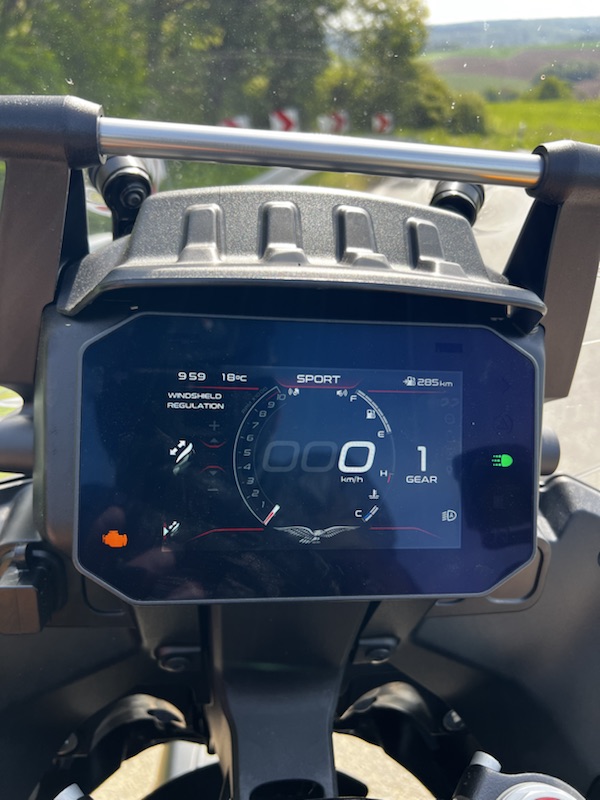
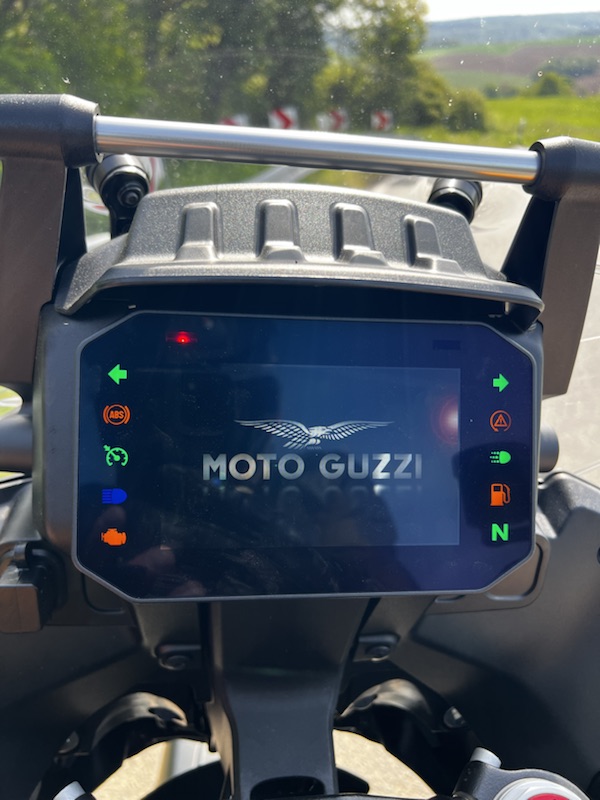
Hinter PFF verbirgt sich das 4D-Radarsystem der Piaggio-Mutter mit (FCW) Frontradar, das auch auf die integrierte Geschwindigkeitsregelanlage (FCC) wirkt und durch aktiven Eingriff in die Motorbremse die Geschwindigkeit der Maschine zum vorausfahrenden Fahrzeug regelt. Ein Toter-Winkel-Assistent (BLIS) und das Heckradar (LCA) runden das Sicherheitssystem ab und warnen den Fahrer bei Bedarf über Signal-LEDs in den Spiegeln und ein rotes Dreieck im volldigitalen TFT-Farbdisplay über Gefahren. Das wiederum lässt in Sachen Anzeige keine Fragen und Wünsche offen, ebenso wie die fünf verfügbaren Fahrmodi, die sich bequem über einen Taster am rechten Lenkerende einstellen lassen. Den deutlichsten Unterschied zwischen den Modi wie sollte es auch anders sein, spürt man im Rain Mode, denn hier macht sich die reduzierte Gasannahme am stärksten bemerkbar. Der Off -Road Mode deaktiviert für das Gelände das hintere ABS und stellt die Traktionskontrolle automatisch auf Stufe 1. Auf Knopfdruck ist die aber auch vollständig abschaltbar. Alle anderen Modi werden ihren Bezeichnungen Sport, Road und Tour sehr gut gerecht und sind individuell auf der Tour je nach Wunsch und Gusto anpassbar.
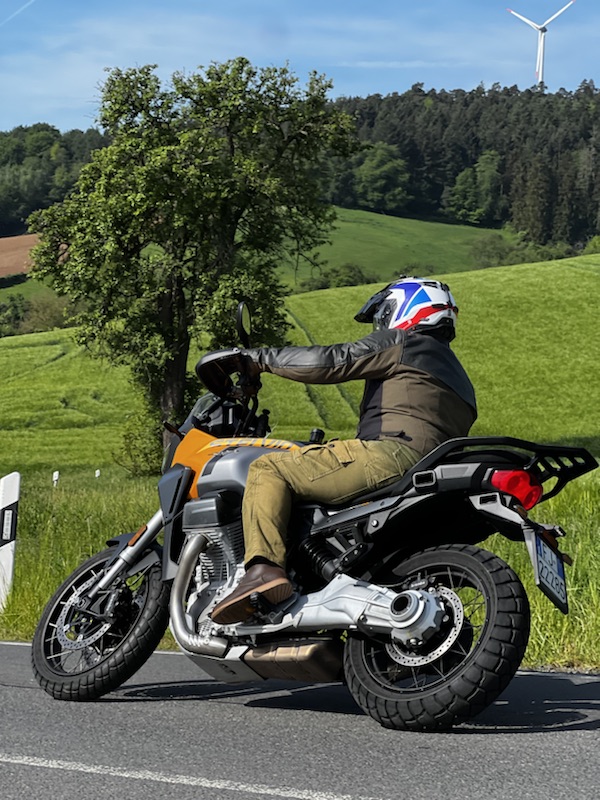
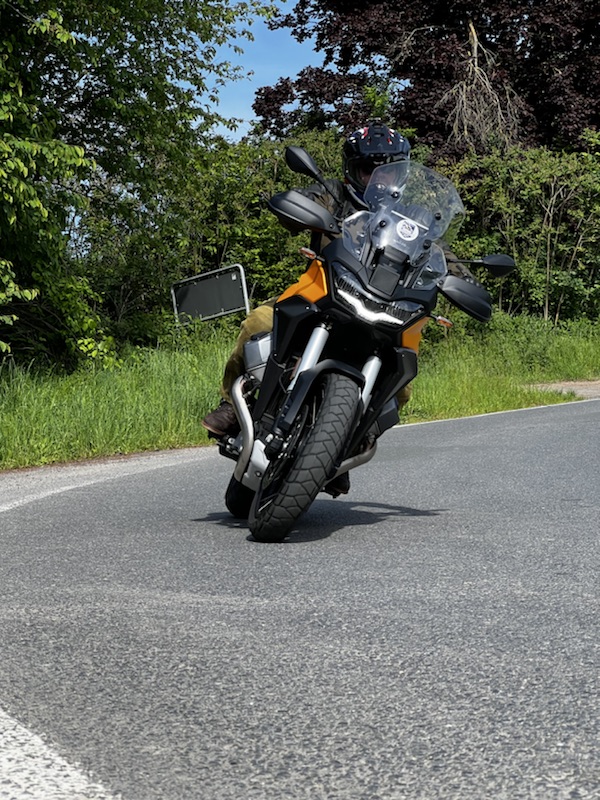
In Sachen Anpassung kann die Stelvio auch beim Sitzkomfort punkten. Neben der Standardsitzhöhe gibt es sowohl höhere als auch niedrigere Sitzbänke mit und ohne Sitzheizung (jeweils 2cm). Bei einer Körpergröße von 170 cm passt mir die niedrige Sitzbank wahrscheinlich noch ein wenig besser als die Standardsitzbank die ich im Test gefahren bin. Der Kniewinkel auf der Standardhöhe ist entspannt, was das entspannte Dahingleiten über die schmalen Gassen fördert. Aber natürlich kann die Stelvio auch richtig feuern, wenn man sie lässt. Dabei singt der kurze Auspuffstummel rechts sein fröhliches Lied in die Natur hinaus und sagt deutlich hier komme ich. Ja, neben der gerade erwachenden Frühlingsnatur steigt mit jeder Kurve auch das Vertrauen in die Qualitäten Guzzi. Der breite, etwas zu weit nach vorn montierte Lenker ist dabei keine wirkliche Spaßbremse, etwas weiter nach hinten gedreht wäre er in meinem Fall mit kurzen Armen aber einfach angenehmer. Alle Schalter und Knöpfe sind leicht zu erreichen und man spürt ihre Druckpunkte, was gerade mit dickeren Handschuhen ein Vorteil ist. Lediglich der Blinkerschalter sitzt etwas weit zu Fahrer hin montiert, sodass man mit kurzen Fingern etwas mehr Fingerfertigkeit beweisen muss. Apropos Schalter, hier kommen wir in der Klasse der Reiseenduros zu einer mittlerweile echten Seltenheit. Über das Schalterkreuz am linken Lenkerende lässt sich das verbaute elektrisch stufenlos verstellbare Windschild bedienen. Beim Testen hat es mir in der unteren Position nicht ganz so gut gepasst, oben jedoch funktionierte es einwandfrei. Am Ende hat es etwas mit der Körpergröße, dem eigenen Empfinden und dem Helm zu tun, aber ich denke jeder findet seine Einstellung.
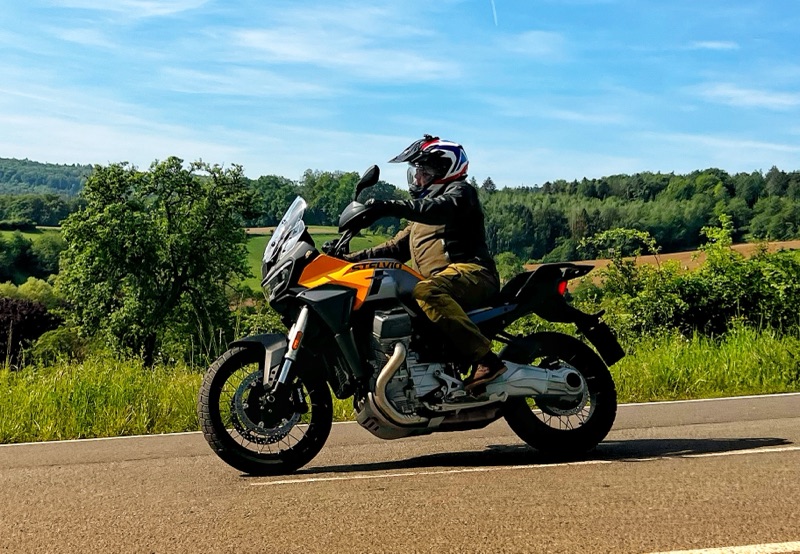
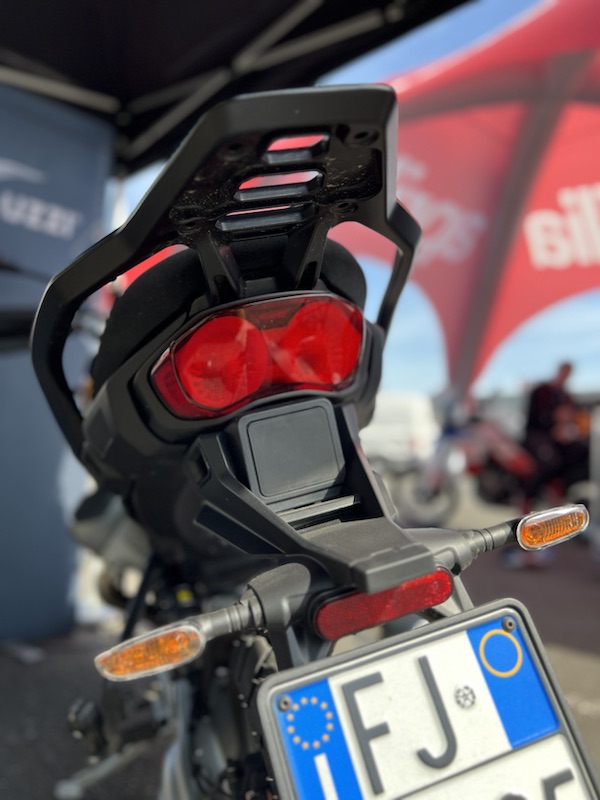
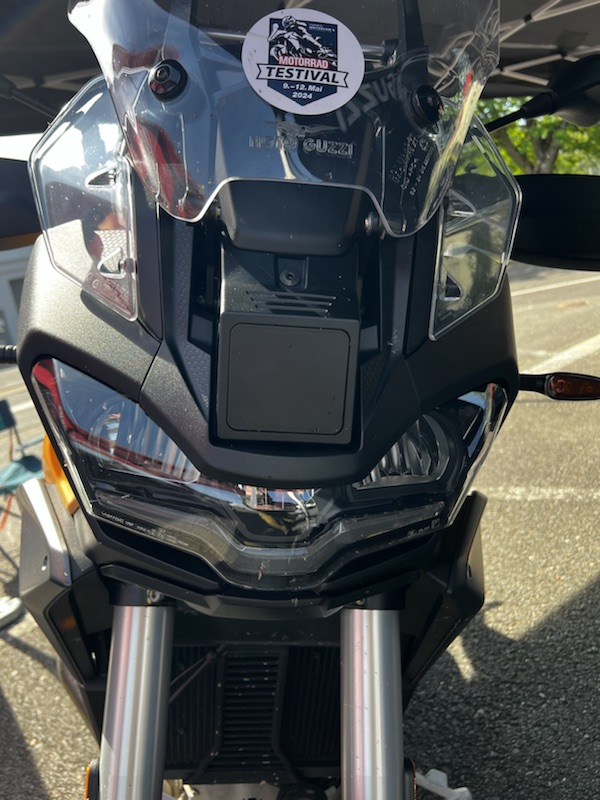
Ergänzt wird die Technische Ausstattung der Stelvio durch eine rundum installierte LED-Beleuchtung mit adaptivem Kurvenlicht und dem angedeuteten Adler als Tagfahrlicht, wie man ihn schon aus der Mandello kennt. Hübsch aufbereitet sowohl an der Front wie auch am markanten Heck.
Fahrwerk und Bremsen
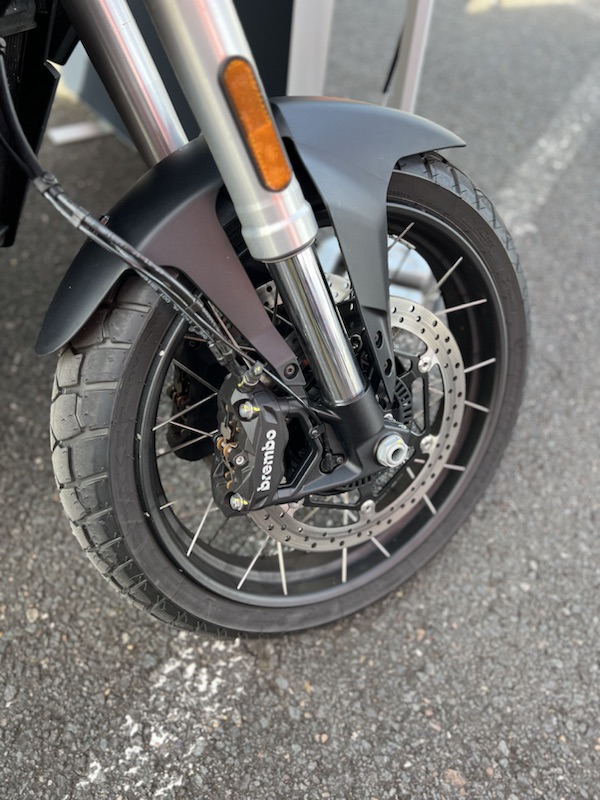
Das Fahrwerk der Stelvio verzichtet auf die semiaktive Variante der V100 Mandello. Kann man natürlich machen ist aber in diesem Segment unter Umständen nicht ganz der beste Weg, da die Mitbewerber hier ordentlich vorgelegt haben. Ein guter Kompromiss in der Abstimmung ist es trotzdem, denn sowohl die 46er Sachs-Gabel wie auch das KBY-Federbein haben die fahrfertig 246 kg schwere Maschine gut im Griff und können beide in der Vorspannung und der Zugstufendämpfung stufenlos angepasst werden. So gibt es auch mit 463 Kilogramm Gesamtgewicht kaum Probleme, wenn es auf die große Tour geht. Ebenso wenig übrigens wie beim Bremsen, denn die Brembozangen beißen sehr gut in die 320er Scheiben an der Front und bieten in Verbindung mit dem Kurven-ABS ein hohes Maß an Sicherheit.
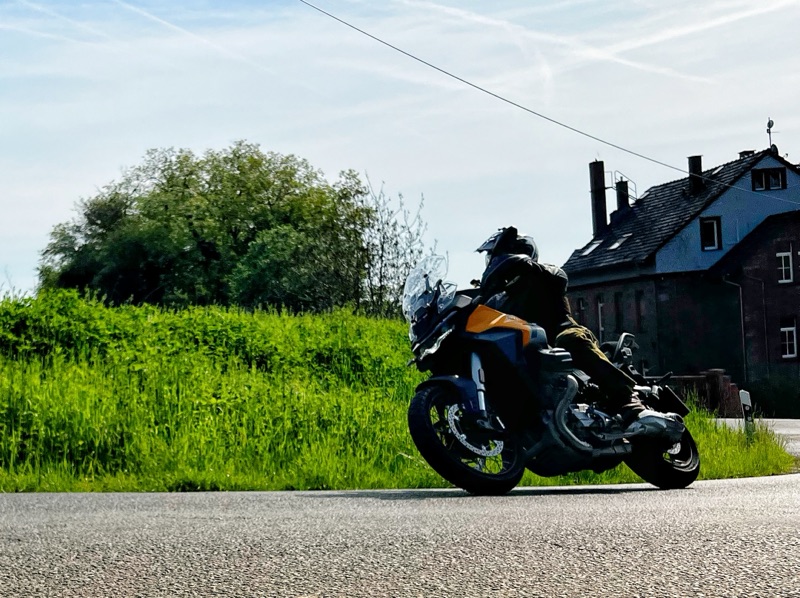
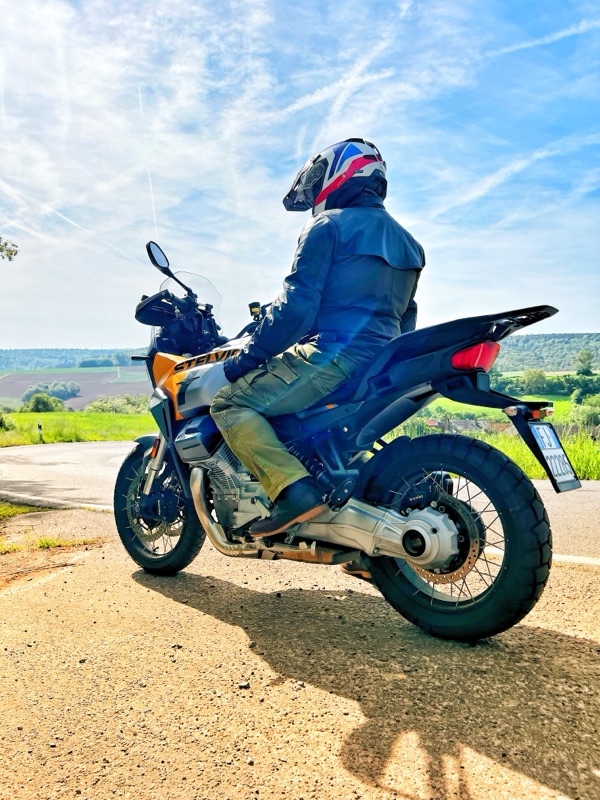
Und Sicherheit verbunden mit Zuverlässigkeit ist immer eine gute Kombination, denn die Stelvio ist ein Motorrad für Reiselustige, das steht fest. Ihr 21 Liter fassender Tank und ihr sparsamer Verbrauch erlauben bei fröhlicher Fahrt zwischen 3500 und 7000 Umdrehungen locker Reichweiten zwischen 350 bis 370 Kilometern.

Fazit
Bei unserer Testfahrt durch den Odenwald fiel auf, dass die neue Moto Guzzi Stelvio extrem viel Emotionen versprüht. Sie fährt sich trotz ihres Gewichtes extrem handlich und lässt sich auch nicht von groben Fahrbahnbelägen aus der Ruhe bringen. Eine Ruhe die Sicherheit garantiert und die dem Fahrer immer wieder ein Lächeln unter den Helm zaubert. Neben dem gelungenen Fahrwerk passt auch der Komfortfaktor auf der Maschine perfekt für lange Touren und auch der Preis ist für das Gebotene fair kalkuliert. Die Basisvariante kostet in Deutschland 16.499 Euro, die besser ausgestattete PFF Rider Assistance Solution Variante 17.299 Euro. Nach oben hin bleiben aber auch bei Moto Guzzi derweil keine Wünsche mehr offen, denn man hat jede Menge Zubehör parat, um die Maschine weiter zu individualisieren und den jeweiligen Bedürfnissen anzupassen. Lassen wir also den jungen Adler vom See fliegen und erfreuen uns an seinen wunderschönen Schwingen.
In diesem Sinne beste Grüße Torsten Thimm
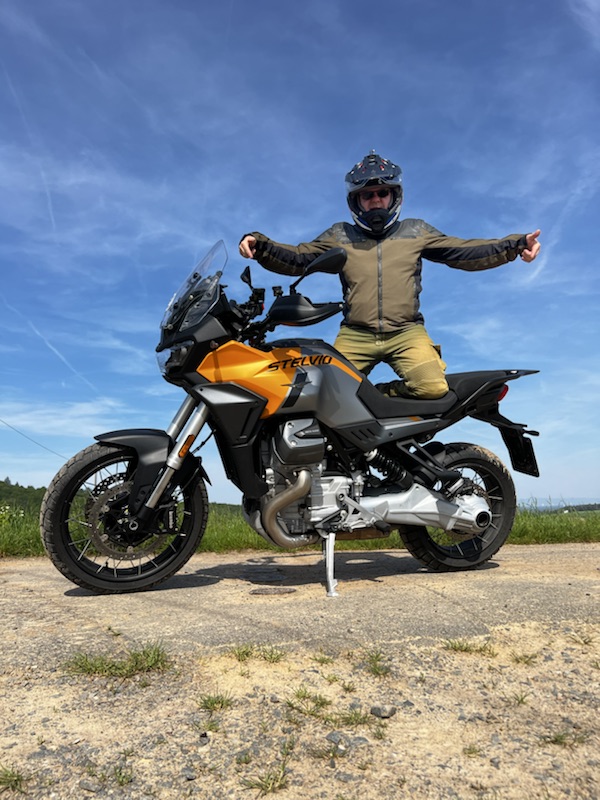
Moto Guzzi Stelvio 1000: Embodying Performance and Comfort for Travellers
Stelvio, a name that is just as present in the minds of motorcyclists as the proven longitudinally mounted V2 drive of the machines from Mandello de Lario. Pure emotions are associated with it, because both the pass with its famous 48 hairpin bends in the Ortler Alps and the new Moto Guzzi Stelvio 1000 evoke plenty of them. However, in contrast to its visually somewhat too polarising predecessor, which certainly rode very well, the new Stelvio is more pleasing to look at without losing its independence in the field of touring enduros. But as we all know, looks alone don’t sell a motorbike, so let’s get on the saddle and find out the Stelvio’s qualities on the road.
The Stelvio 1000
One press of the start button and the mighty V-two comes to life. And it does so with a vehemence and a sound that at first you can hardly believe that the machine has Euro 5 approval. At the same time, the engine also awakens the Moto Guzzi spirit that so many loyal followers and fans of the brand have learnt to appreciate and love over generations. Yes, the Stelvio is alive and kicking, and that’s how it should be, dear readers. The smooth and hydraulically operated clutch lever is easy to reach, ‚clonk‘ the first gear is in the still cold transmission and the journey begins. Until it reaches operating temperature, the 1042 cc engine shows its character a little more clearly, after which both the gear changes and the engine running become smoother, but please friends, you never forget what you’re riding and where it comes from, and that’s great.
The tour takes two turns out of town and the Stelvio really gets going on the country road. Unfortunately, the machine I drove is not equipped with the bidirectional quickshifter, which costs around 200 euros. But even conventionally, the gears slip through the six-speed gearbox extremely quickly and release the maximum torque of 105 Nm to the rear wheel at 6500 rpm. The maximum output of 115 hp comes into play a little later, at 8500 rpm. Of course, and how could it be otherwise with Guzzi, the engine transmits its power to the rear wheel via a stable cardan drive. A multi-stage traction control system protects against rough mischief and too much torque. It works in a similar way to the cornering ABS and the PFF Rider Assistance System hidden in the background. Behind PFF is the Piaggio parent company’s 4D radar system with (FCW) front radar, which also acts on the integrated cruise control system (FCC) and regulates the speed of the machine in relation to the vehicle in front by actively intervening in the engine brake. Blind Spot Assist (BLIS) and the rear radar (LCA) round off the safety system and warn the driver of hazards as required via signal LEDs in the mirrors and a red triangle in the fully digital TFT colour display. This in turn leaves nothing to be desired in terms of display, as do the five available driving modes, which can be conveniently set using a button on the right-hand end of the handlebars. The clearest difference between the modes can be felt in Rain Mode, as this is where the reduced throttle response is most noticeable. Off-Road Mode deactivates the rear ABS for off-road riding and automatically sets the traction control to level 1, although this can also be switched off completely at the touch of a button. All other modes live up to their designations Sport, Road and Tour very well and can be customised individually on the tour according to preference and taste.
When it comes to customisation, the Stelvio also scores highly in terms of seating comfort. In addition to the standard seat height, there are both higher and lower bench seats with and without seat heating (2 cm each). At a height of 170 cm, the low bench seat probably suits me a little better than the standard bench seat that I rode in the test. The knee angle at the standard height is relaxed, which promotes relaxed gliding along the narrow lanes. But of course the Stelvio can also really fire if you let it. The short exhaust stub on the right sings its cheerful song out into the countryside and clearly says here I come. Yes, in addition to the awakening springtime nature, confidence in the qualities of the Guzzi increases with every bend. The wide handlebar, which is mounted a little too far forwards, is not really a brake on fun, but in my case with short arms it would simply be more comfortable turned a little further back. All switches and buttons are easy to reach and you can feel their pressure points, which is a particular advantage when wearing thicker gloves. Only the indicator switch is mounted a little far towards the rider, so you have to demonstrate a little more dexterity with short fingers. Speaking of switches, here we come to what is now a real rarity in the touring enduro class. The built-in electrically infinitely adjustable windscreen can be operated via the switch cross on the left handlebar end. During testing, it didn’t fit me quite so well in the lower position, but it worked perfectly at the top. In the end, it has something to do with body size, personal preference and the helmet, but I think everyone will find their own setting.
The technical equipment of the Stelvio is complemented by all-round LED lighting with adaptive cornering lights and the suggested eagle as a daytime running light, as already familiar from the Mandello. Beautifully designed both at the front and at the striking rear.
Chassis and brakes
The chassis of the Stelvio does without the semi-active variant of the V100 Mandello. Of course, this can be done, but it may not be the best way to go in this segment, as the competition has really taken the lead here. Nevertheless, it is a good compromise in terms of set-up, as both the 46 mm Sachs fork and the KBY shock absorber have a good grip on the 246 kg machine ready to ride and can both be continuously adjusted in terms of preload and rebound damping. So even with a total weight of 463 kilograms, there are hardly any problems when it comes to the big tour. The same goes for braking, as the brake callipers bite into the 320 mm discs at the front very well and offer a high level of safety in conjunction with the cornering ABS.
And safety combined with reliability is always a good combination, because the Stelvio is a motorbike for travellers, that’s for sure. Its 21-litre fuel tank and economical fuel consumption allow for easy ranges of between 350 and 370 kilometres when riding happily between 3500 and 7000 rpm. Conclusion
During our test ride through the Odenwald, it was noticeable that the new Moto Guzzi Stelvio exudes a great deal of emotion and definitely creates a „HAVEN WILL FEELING“. Despite its weight, it is extremely manoeuvrable and is not fazed by rough road surfaces. A calmness that guarantees safety and always puts a smile on the rider’s face. In addition to the successful chassis, the comfort factor on the machine is also perfect for long tours and the price is also fairly calculated for what is on offer. The basic version costs 16,499 euros in Germany, the better equipped PFF Rider Assistance Solution version 17,299 euros. However, Moto Guzzi leaves nothing to be desired at the top end, as there are plenty of accessories available to further customise the machine and adapt it to the respective requirements. So let’s let the young eagle fly from the lake and enjoy its beautiful wings.
With this in mind, best regards Torsten Thimm

 TT MotorBike Blog