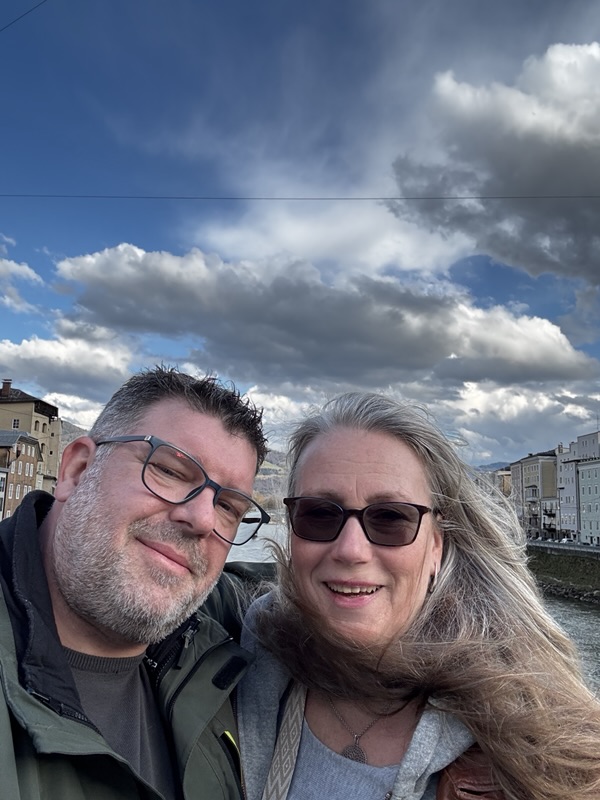
ZWEI LÄNDER, EIN TRAUMTAG UND DIE LUST AM UNTERWEGSSEIN. 🏍️☀️(ENGLISCH VERSION BELOW)
Es gibt echt Tage, an denen du morgens auf dein Motorrad steigst und schon weißt, dass es ein guter Tag wird. Nicht, weil du auf deinem Navi eine besonders spektakuläre Route erstellt hast. Auch nicht, weil irgendwo ein Pass mit möglichst vielen Kehren auf dich wartet, sondern weil die Sonne vom Himmel lacht, die Luft nach Sommer und Freiheit riecht, du bequem auf dem Bike sitzt und vor dir die Alpen liegen.
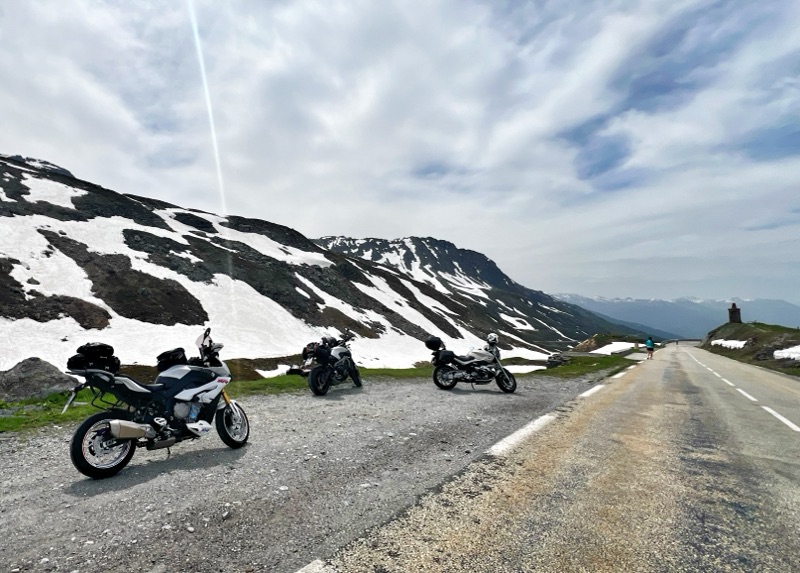
Genau so ein Tag ist es, als wir im italienischen Aostatal unsere Motoren an diesem Morgen starten. Unsere Bikes sind bereit, die Sonne gibt bereits alles und wir haben die Zeit nirgendwo dringend hinzumüssen. Außer vielleicht dorthin, wo es besonders schön ist.😉
Unser Ziel? Der Kleine Sankt Bernhard. Eine der Verbindungen zwischen Italien und Frankreich, die weit mehr zu bieten hat als ein Schild mit einer Höhenangabe und einen Grenzübertritt.
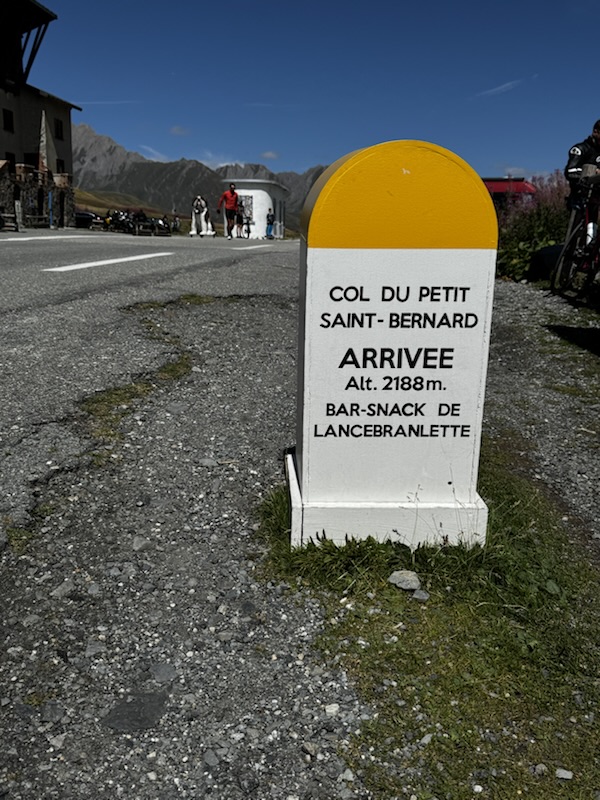
Damit herzlich willkommen zur nächsten einmaligen Passgeschichte. Heute nehmen wir euch mit auf eine Reise zwischen italienischer Lebensfreude und französischer Alpenidylle.
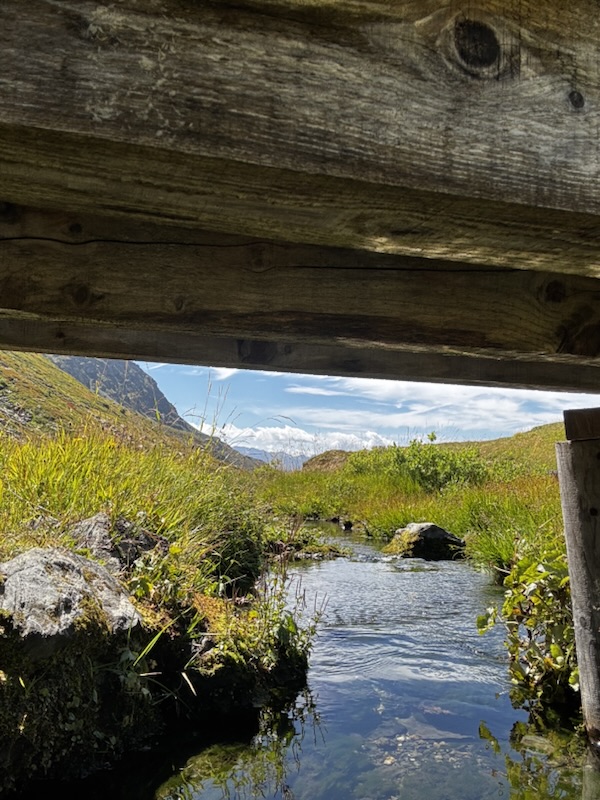
DAS AOSTATAL. WO DIE ALPEN GANZ GROSS AUFSPIELEN.
Das Aostatal ist unser Startpunkt und eine Regionen, die man als Motorradfahrer viel öfter auf dem Zettel haben sollte. Eingebettet zwischen gewaltigen Gipfeln, darunter das Mont-Blanc-Massiv und das Monte-Rosa-Gebiet, bietet es eine Kulisse, bei der selbst abgebrühte Alpenfahrer gelegentlich vergessen, auf die Straße zu schauen. Natürlich nur ganz kurz. Wir wollen ja schließlich nicht, dass aus unserer Passepartout Story eine Schadensmeldung wird gelle. 😉
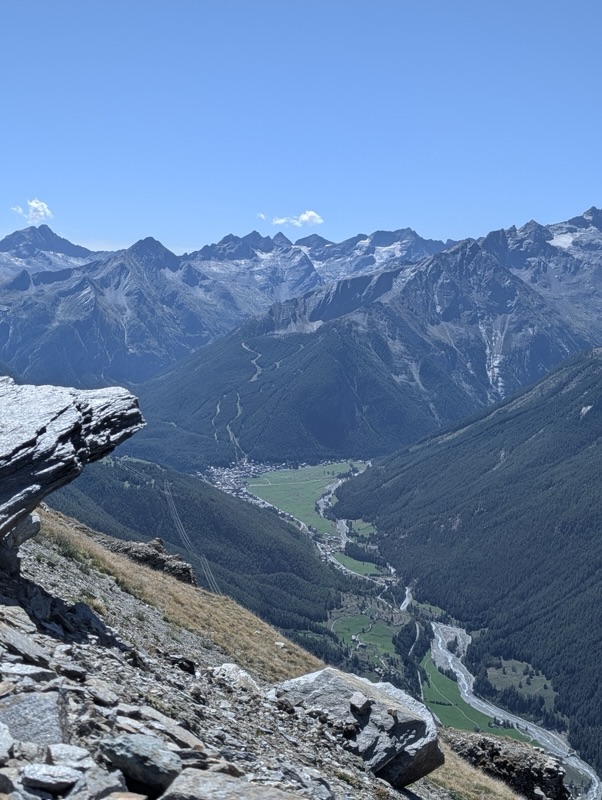
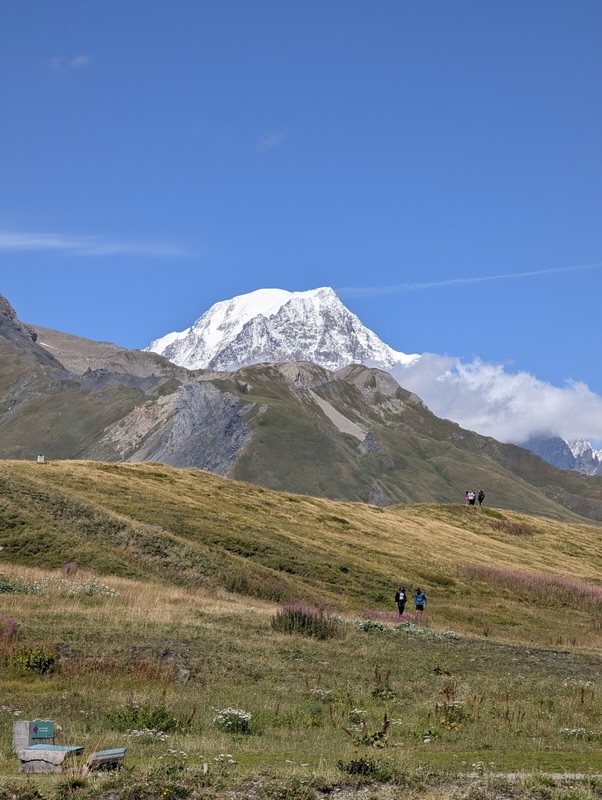
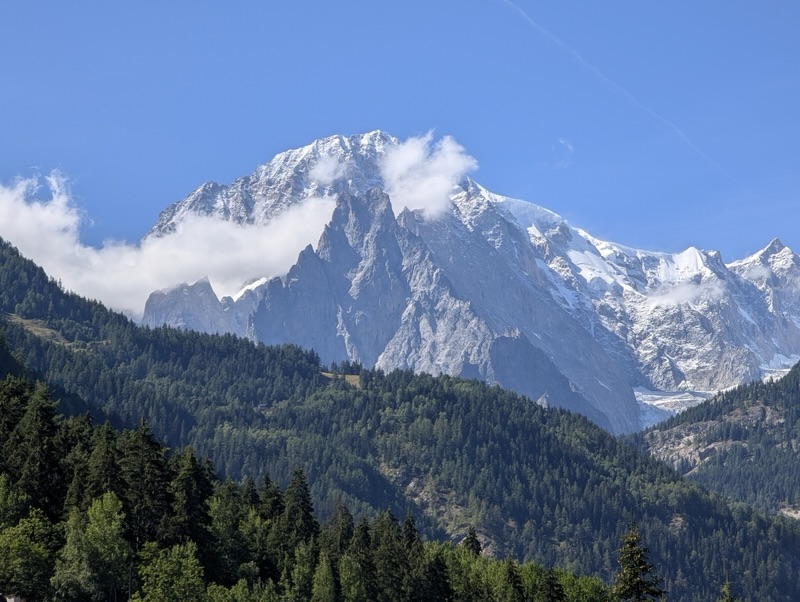
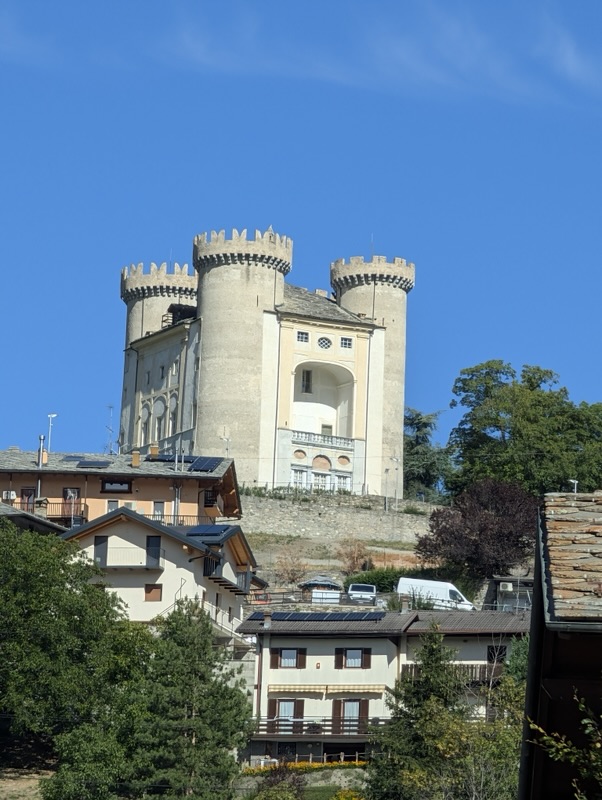
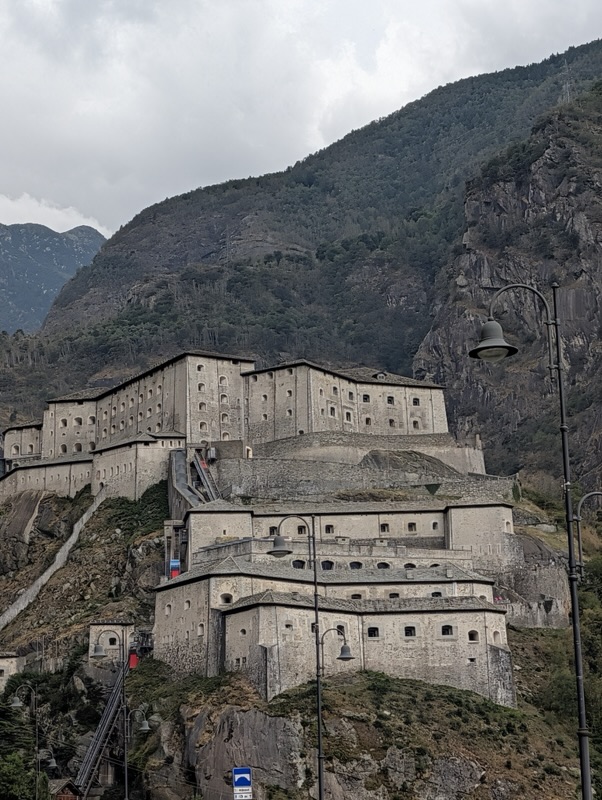
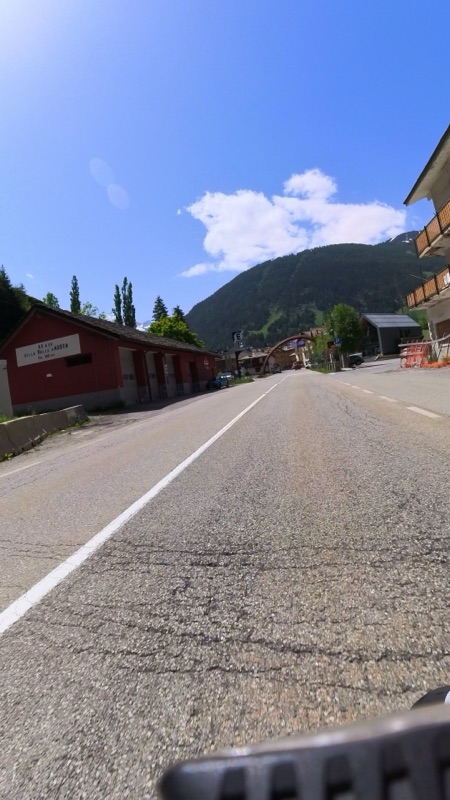
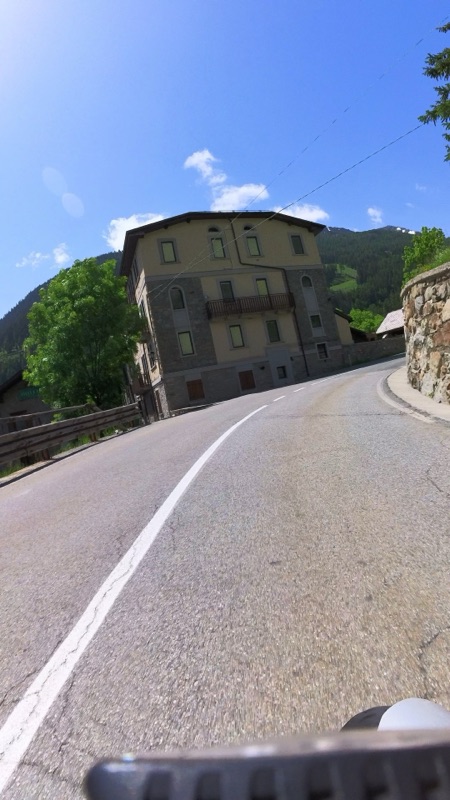
Schon nach den ersten Kilometer öffnet sich die Landschaft, die Berge und Burgen rücken ins Blickfeld und hinter jeder Kurve wartet gefühlt ein neues Motiv. Mal sind es kleine Ortschaften, mal steile Berghänge, dann wieder die gewaltigen Gipfel, die hier scheinbar mühelos in den Himmel wachsen.
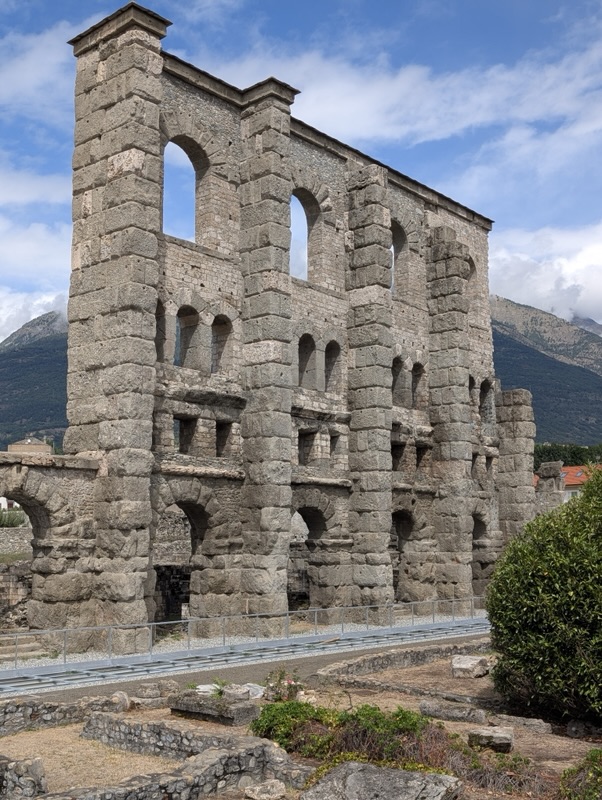
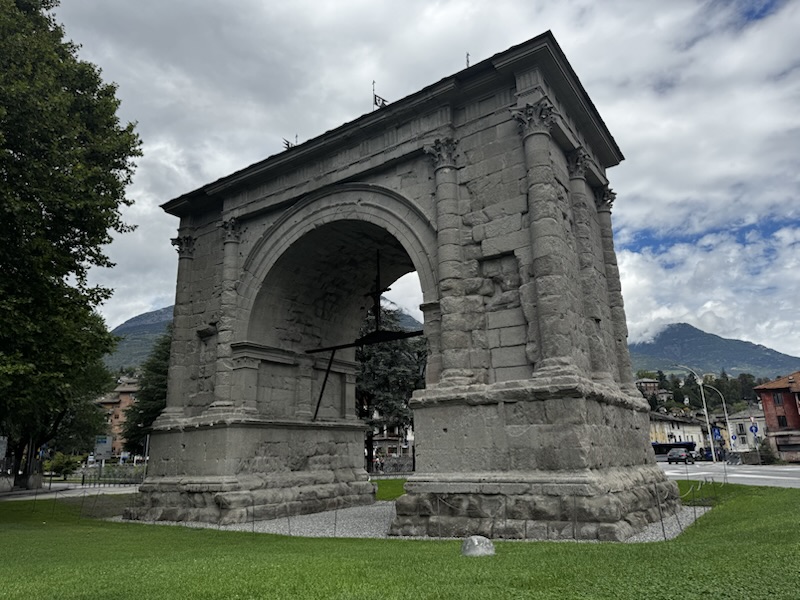
Dazu kommt die Geschichte der Region. Rund um die Landeshauptstadt Aosta begegnet man römischen Spuren, alten Gemäuern und ja Burgen, die seit Jahrhunderten über die Täler und Verkehrswege wachen. Hier wurde schon gereist, gehandelt und gekämpft, lange bevor wir auf unseren Motorrädern die Gegend erkunden konnten.
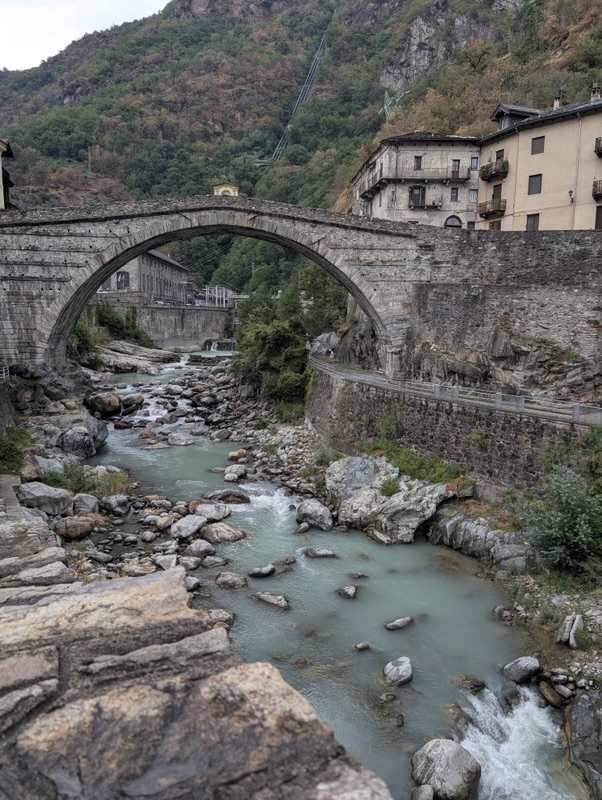
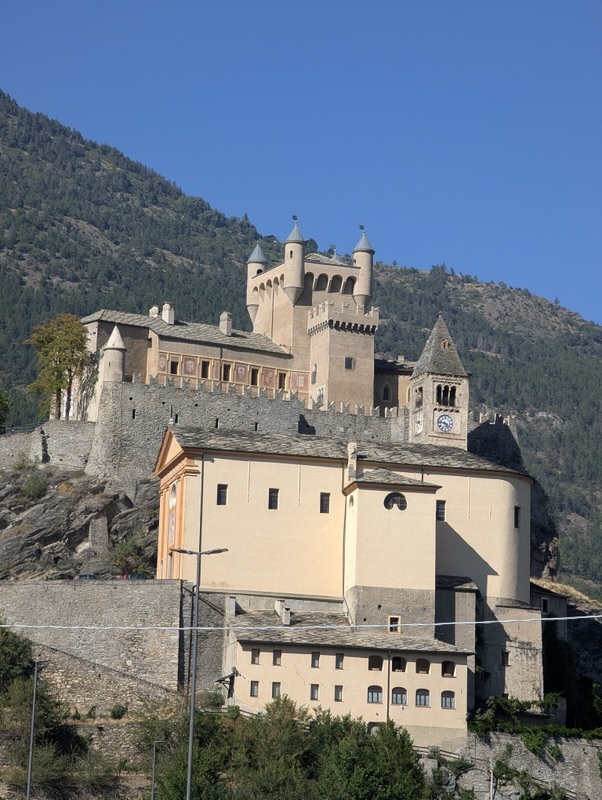
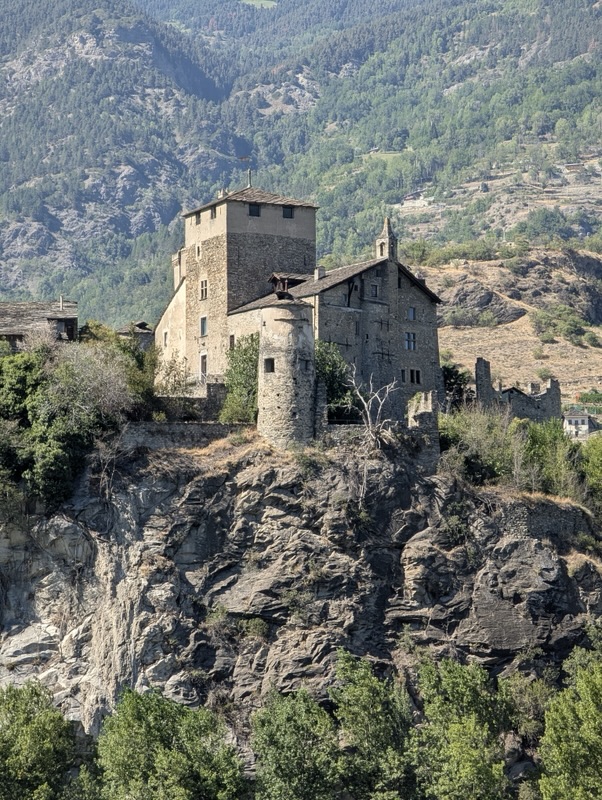
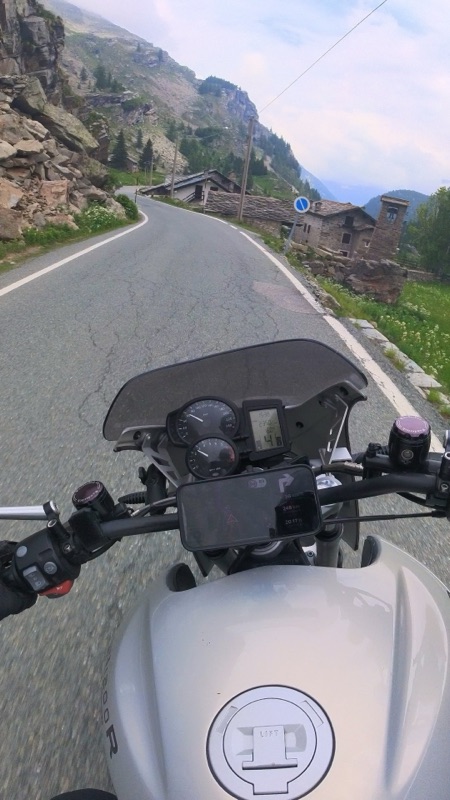
Und während wir uns langsam aus dem Tal nach oben arbeiten, wird aus dieser wunderschönen Landschaft allmählich ein echtes Alpenabenteuer.
DER KLEINE SANKT BERNHARD. EIN PASS MIT GESCHICHTE UND WEITBLICK.
Der Kleiner Sankt Bernhard Pass, auf Italienisch Colle del Piccolo San Bernardo und auf Französisch Col du Petit-Saint-Bernard, verbindet das Aostatal mit der französischen Tarentaise.
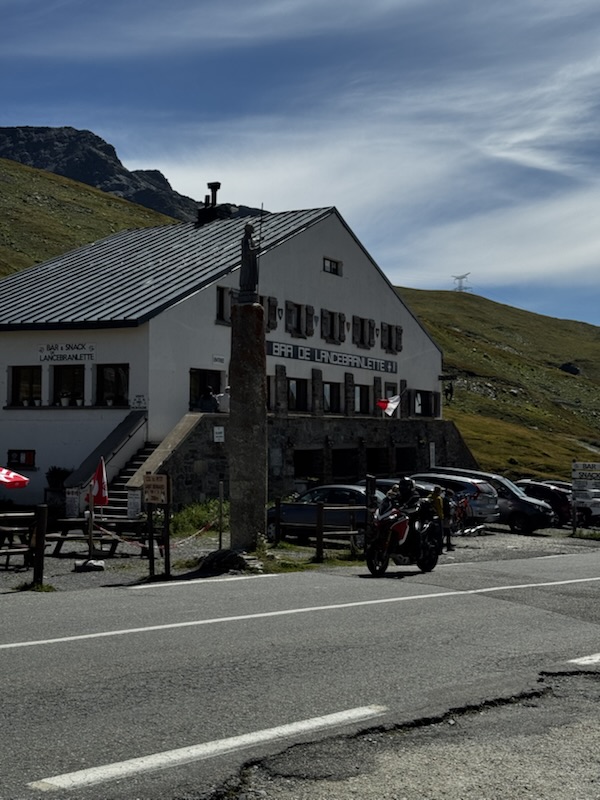
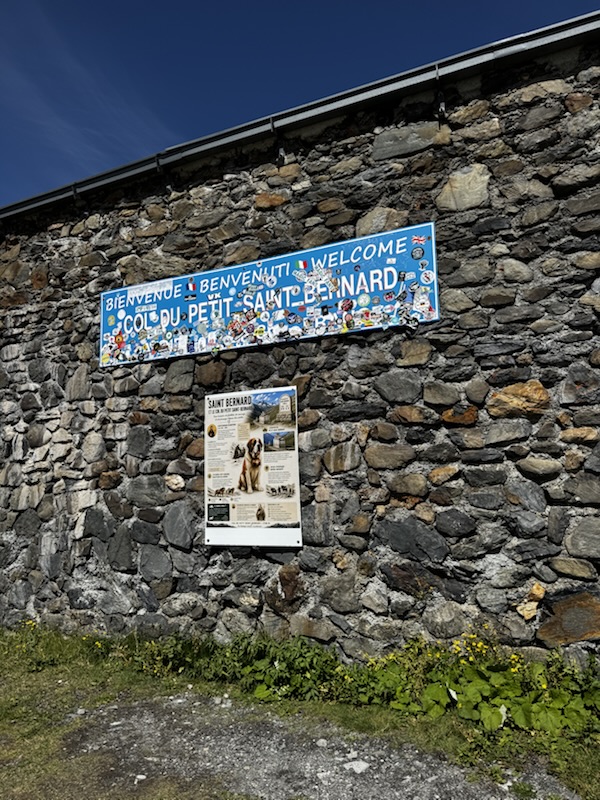
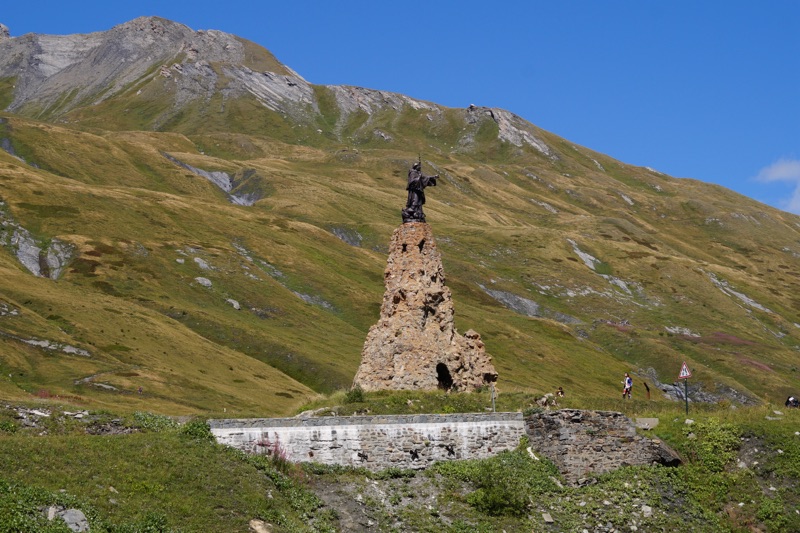
Seine Geschichte reicht weit zurück. Bereits in der Römerzeit war dieser Übergang eine bedeutende Verbindung über die Alpen. Später prägte der heilige Bernhard von Menthon die Geschichte der Alpenübergänge und gründete Hospize, die Reisenden Schutz bieten sollten. Auch wenn die Namensgeschichte des Passes etwas komplexer ist, steht der Kleine Sankt Bernhard bis heute für genau das, was Alpenübergänge seit jeher ausmachten. Menschen, Kulturen und Länder miteinander zu verbinden.
Und genau das tun wir heute ebenfalls. Nur eben mit zwei Rädern und deutlich weniger Gepäck als eine mittelalterliche Handelskarawane.Wobei ich zugeben muss, dass sich in unseren Motorradkoffern manchmal Dinge befinden, deren Notwendigkeit sich erst nach mehreren hundert Kilometern und mindestens zwei Cappuccino erschließt. Man muss schließlich Prioritäten setzen.
BERGAUF MIT SONNENSCHEIN UND KURVENLUST.
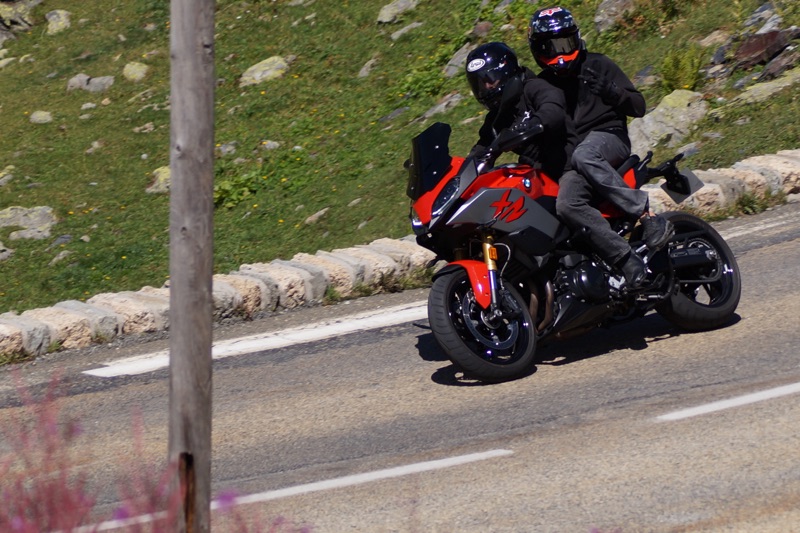
Die Straße führt uns erst langsam und stetig und dann ab Pre-Saint-Didier immer steiler den Berg hinauf. Der Boxer singt sein Lied unter mir, die Landschaft verändert sich und mit jedem Höhenmeter wird die Aussicht einfach ein Stückchen beeindruckender.
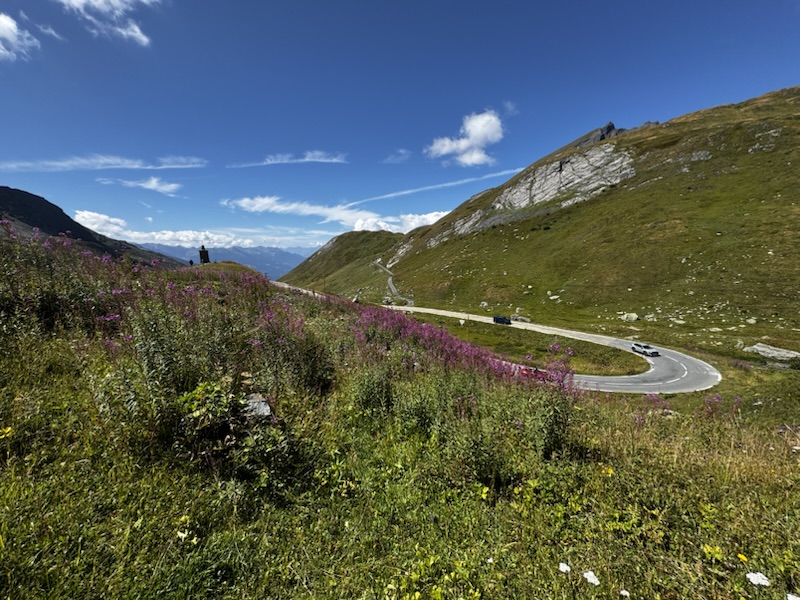
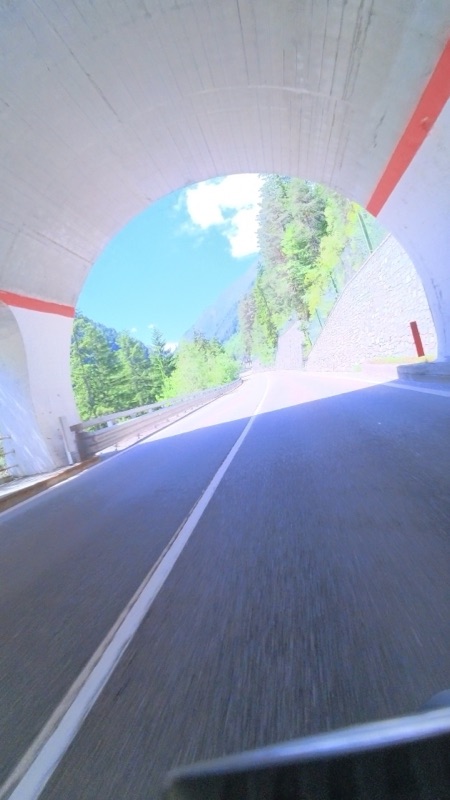
Was ich dabei am Kleinen Sankt Bernhard besonders mag, ist sein Charakter. Er muss nicht wie Andere mit einer endlosen Folge enger Spitzkehren beweisen, dass er ein Alpenpass ist. Die hat er natürlich im unteren Bereich, aber weiter oben gibt es Raum zum Fahren, flüssige Kurvenkombinationen und längere Abschnitte, auf denen sich die Linie wunderbar lesen lässt.
Doch nicht vergessen, das bedeutet keineswegs, dass man die Konzentration ausschalten sollte. Ganz im Gegenteil, gerade die offene Straßenführung verführt dazu, den Blick schweifen zu lassen. Und während die Berge ihre ganze Pracht präsentieren, sollte man trotzdem daran denken, dass eine schöne Kurve zuerst gefahren und erst danach bewundert werden möchte.
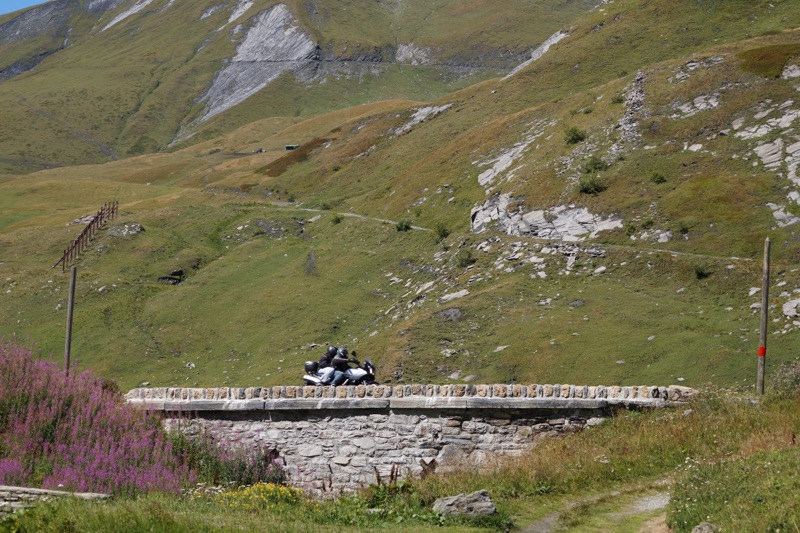
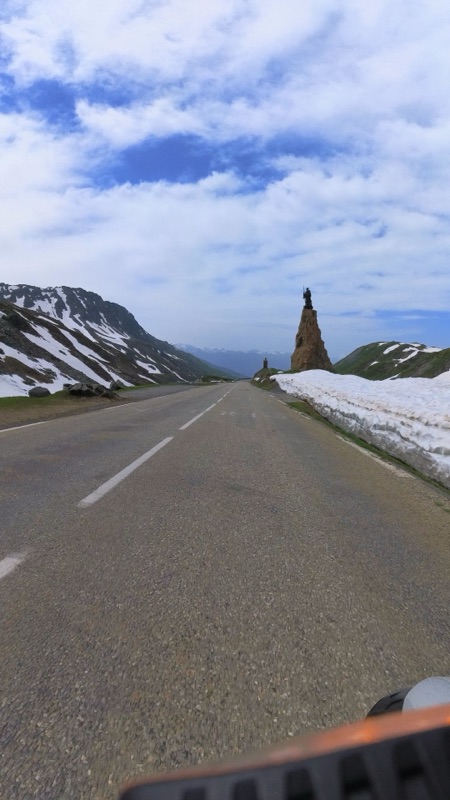
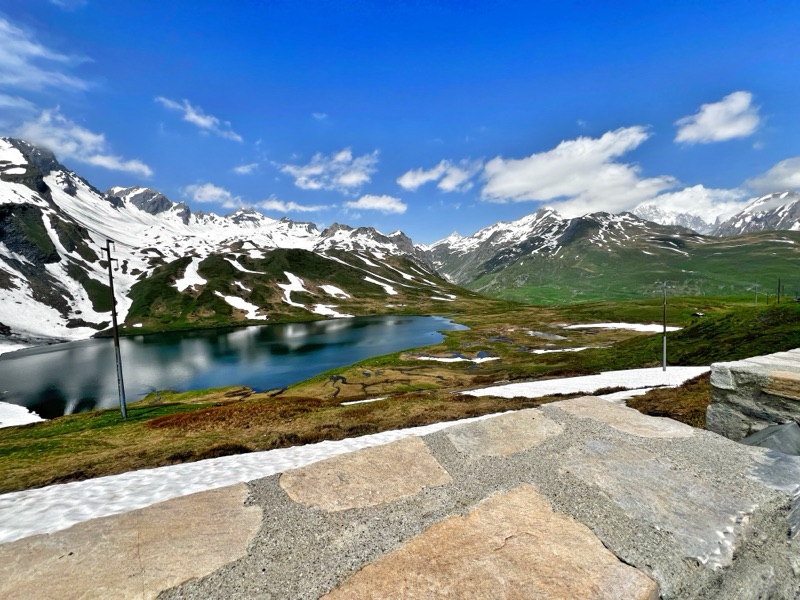
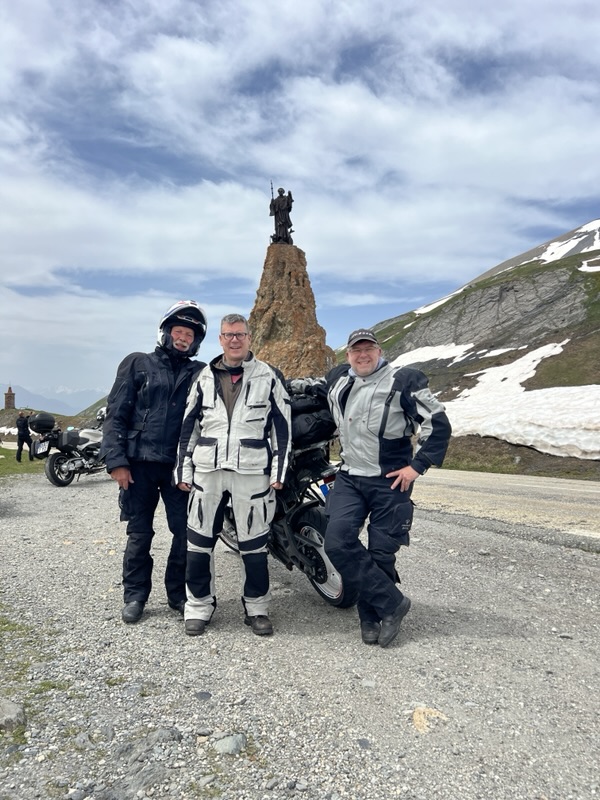
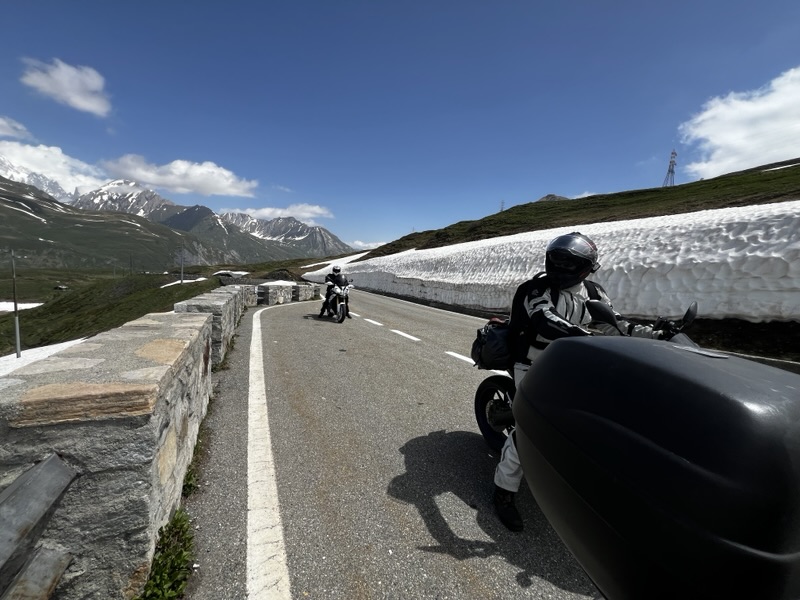
Wir genießen den Rhythmus der Straße, das Zusammenspiel aus Schräglage, Motor und Landschaft. Hier gibt es heute keine Hektik, auch keinen Wettbewerb um die schnellste Passzeit.
OBEN ANGEKOMMEN. UND PLÖTZLICH IST ALLES GANZ WEIT.
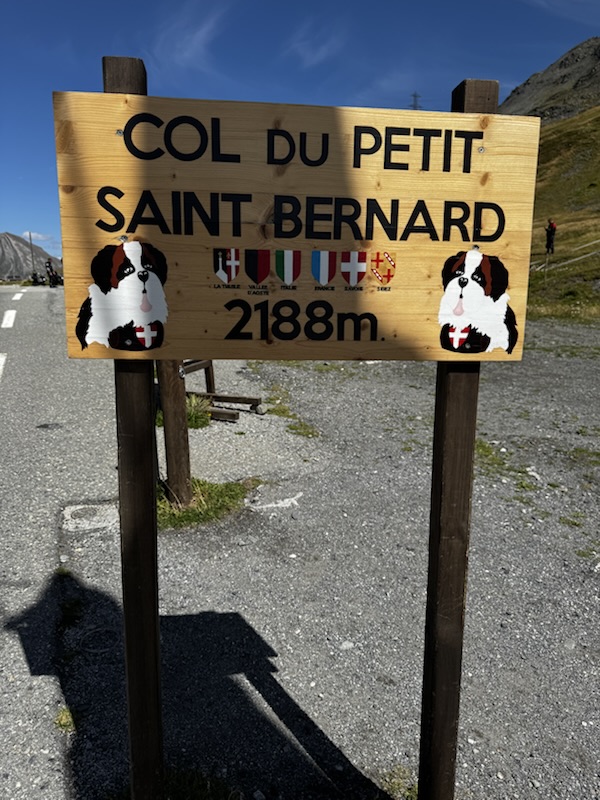
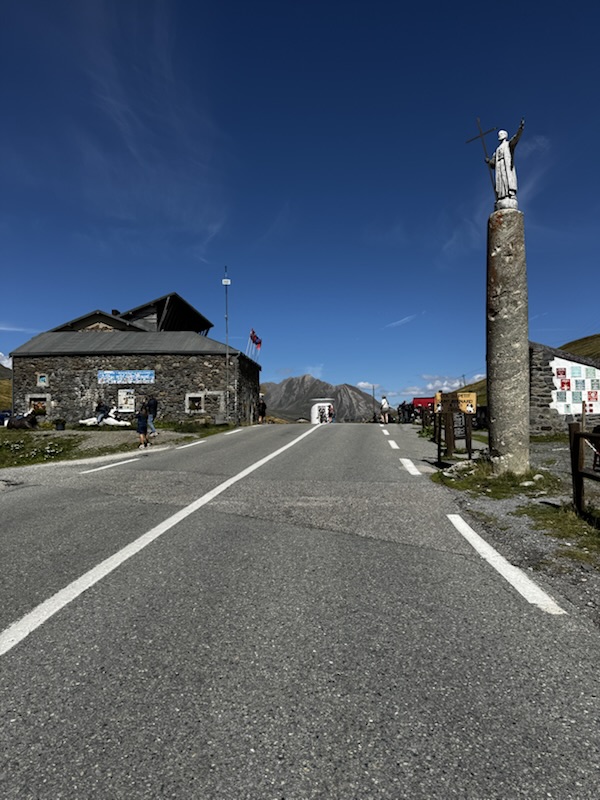
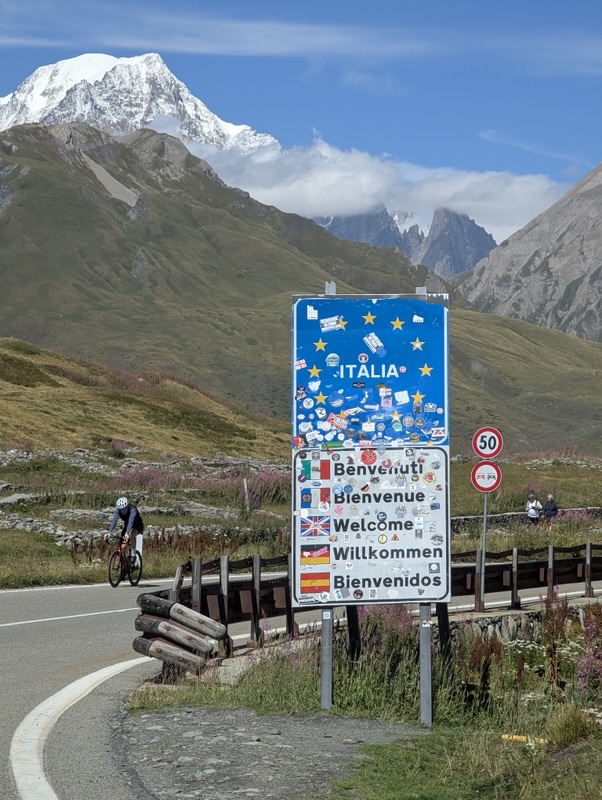
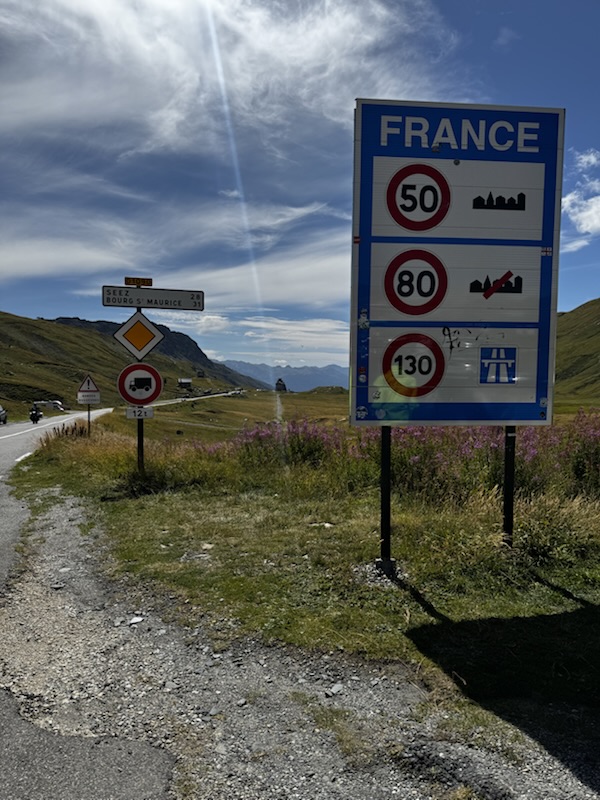
Die Passhöhe liegt auf rund 2.188 Metern. Hier oben verläuft die Grenze zwischen Italien und Frankreich. Ein unscheinbarer Übergang auf der Landkarte, der sich in der Wirklichkeit ziemlich eindrucksvoll präsentiert.
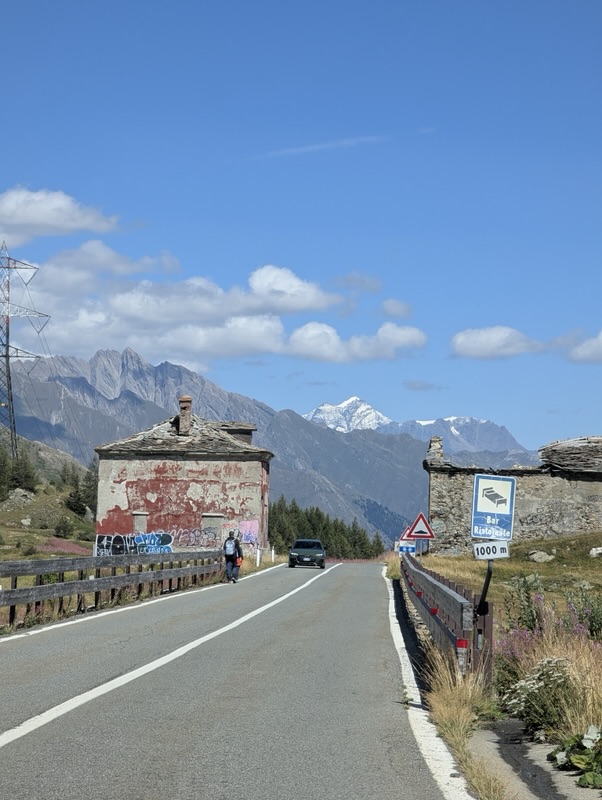
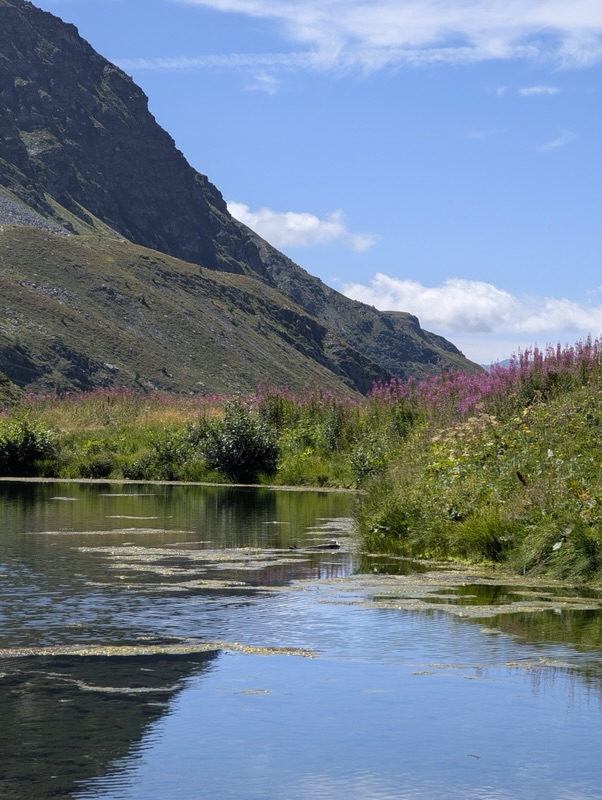
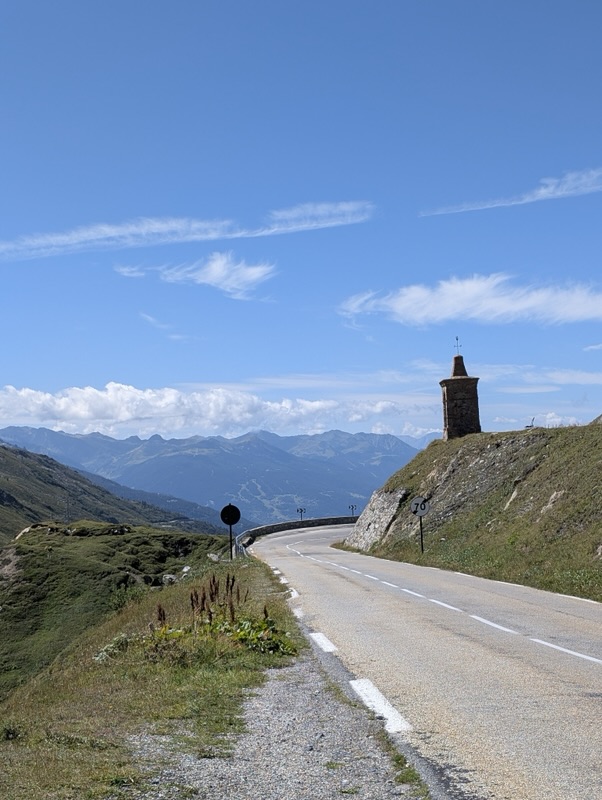
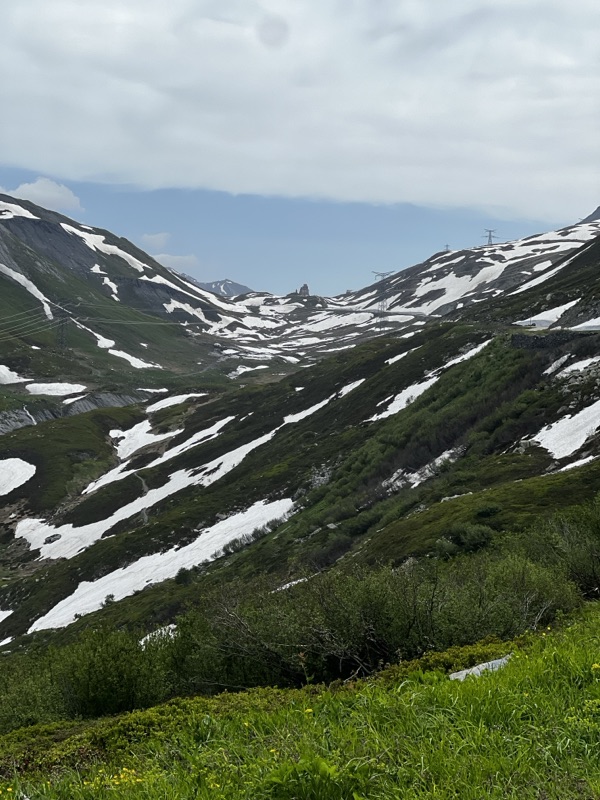
Die Landschaft ist weitläufig, die Vegetation niedriger und die Bergwelt zeigt sich von ihrer wilden Seite. Rundherum liegen Wiesen, Hänge und Gipfel, die sich unter dem tiefblauen Himmel besonders kontrastreich abzeichnen.
An einem solchen Sonnentag möchte man am liebsten die Zeit anhalten. Was durchaus gelingen kann denn einer der ältesten botanischen Gärten, der Botanische Garten Chanousia lädt dazu ein.
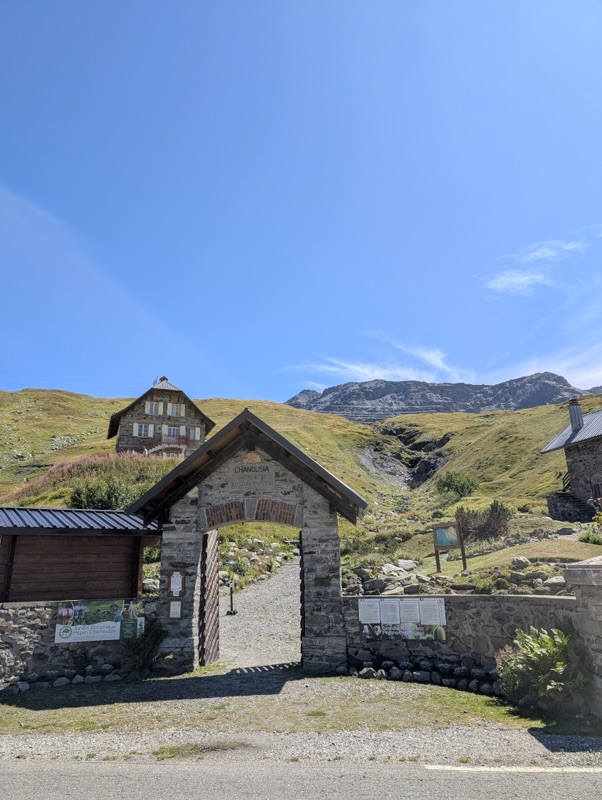
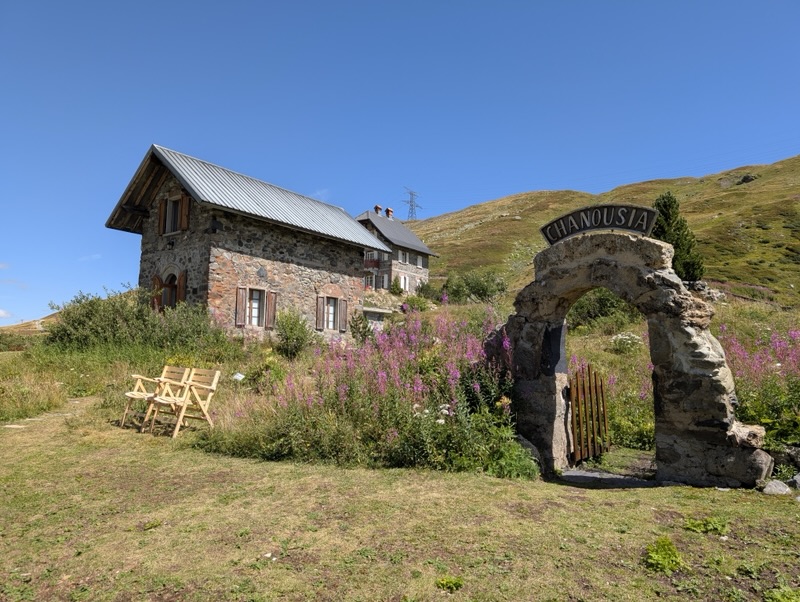
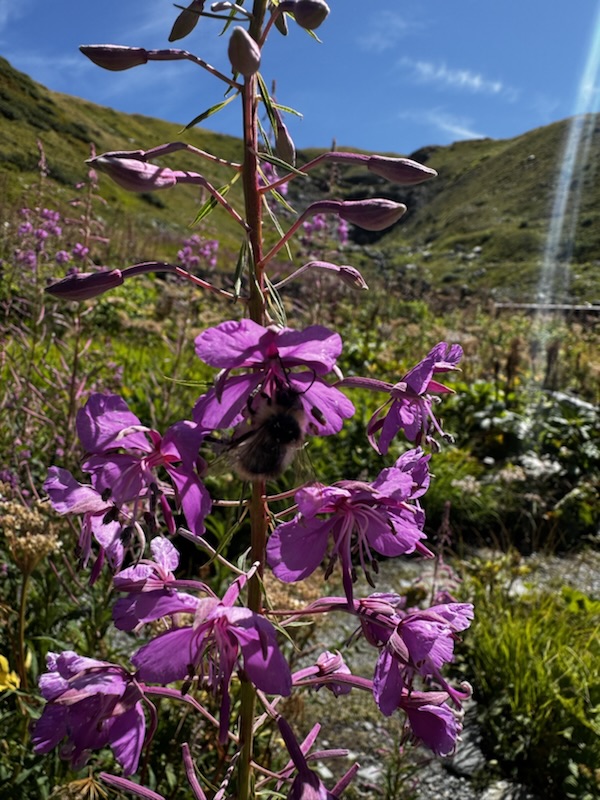
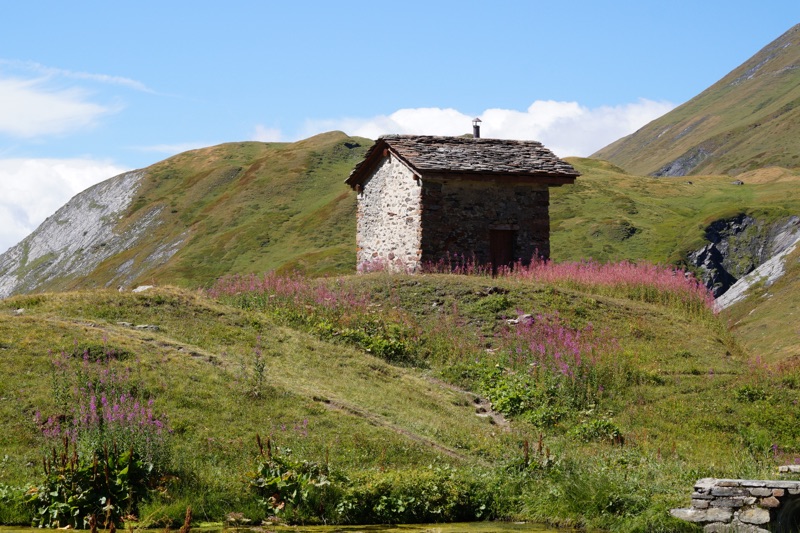
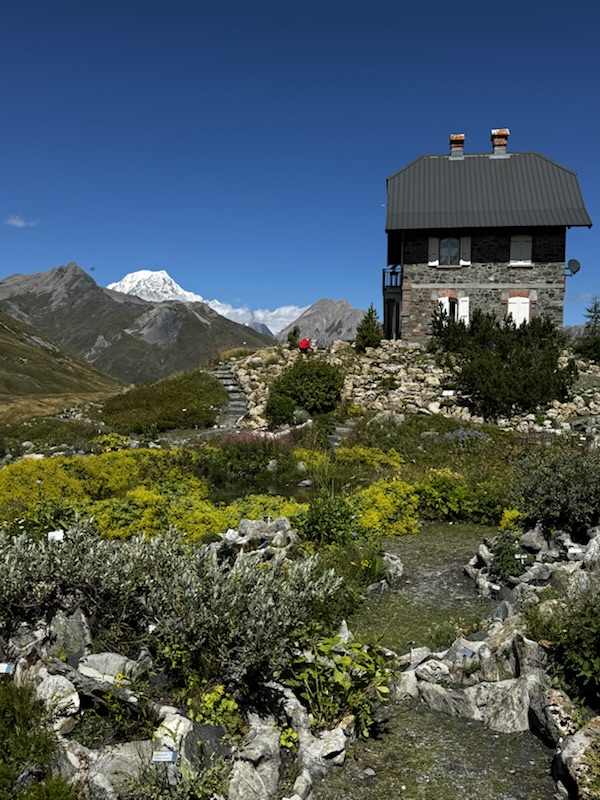
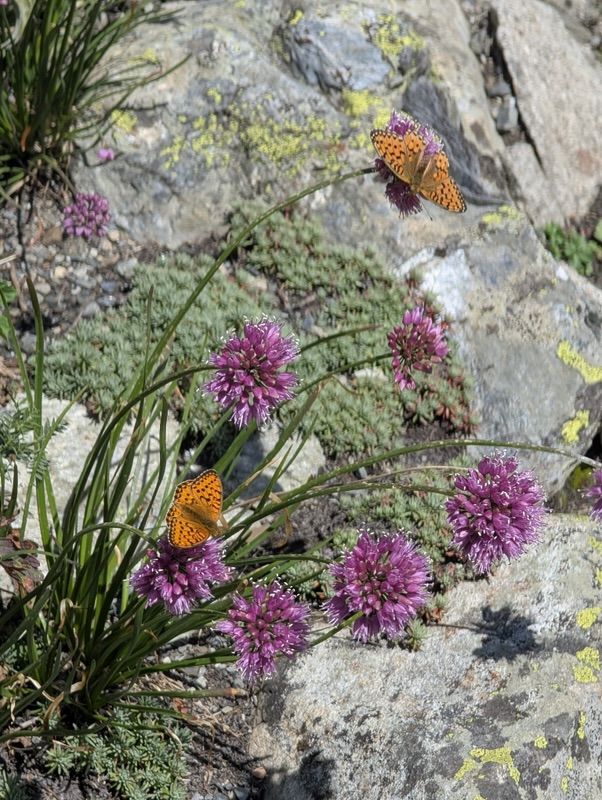
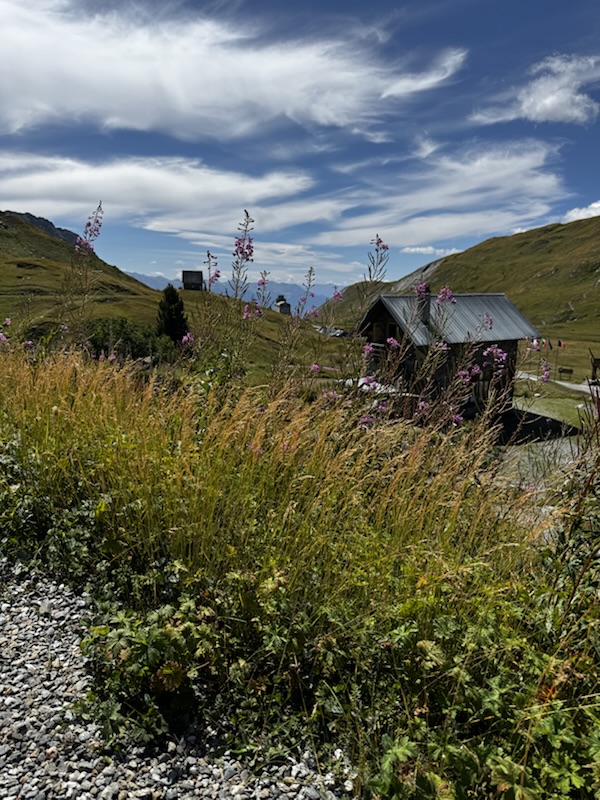
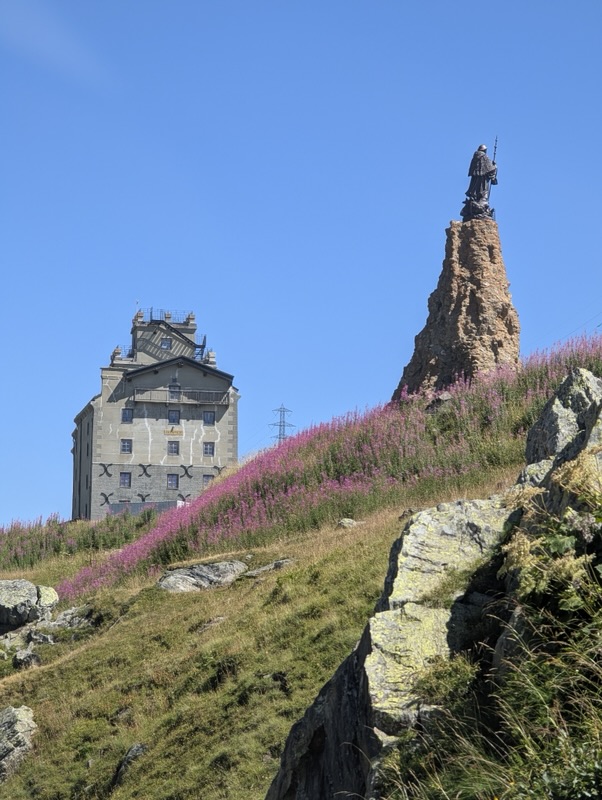
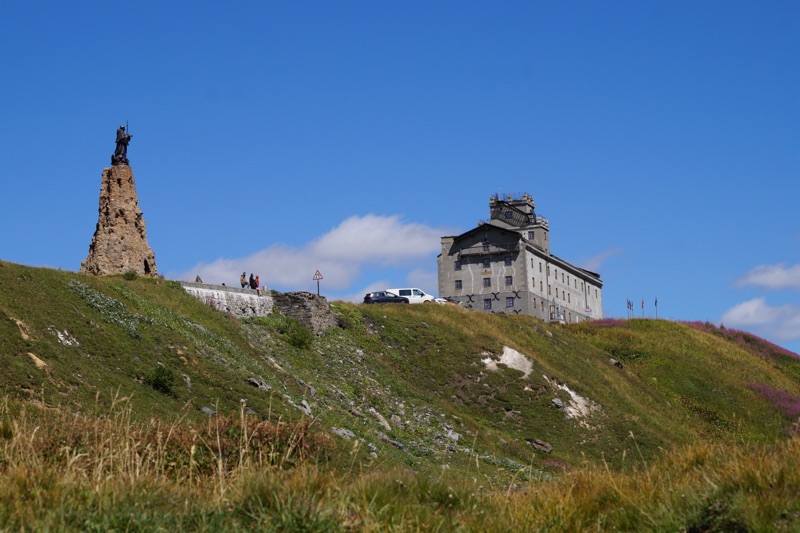
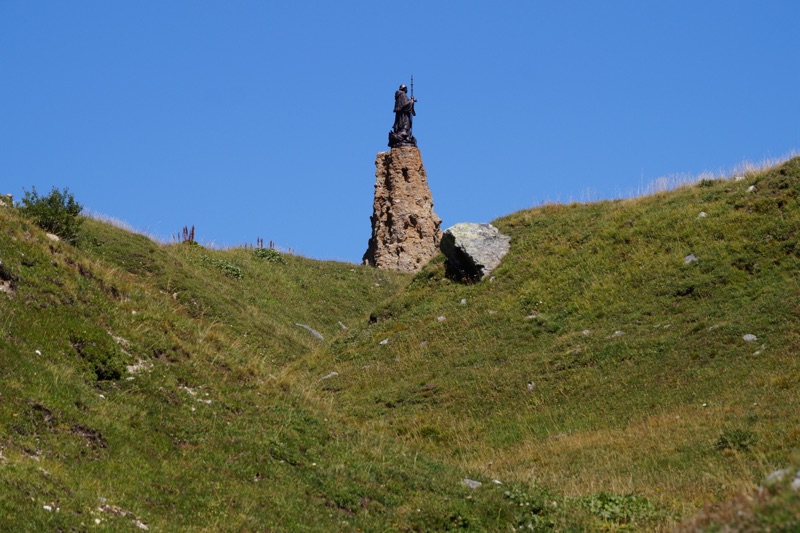
Wir lassen unsere Bikes zur Ruhe kommen und genießen diesen Moment. Auf der Passhöhe finden sich zudem historische Spuren des alten Alpenübergangs. Dazu gehören die Überreste eines römischen Heiligtums und weitere Zeugnisse der langen Geschichte dieses Ortes. Auch die markante Steinkreisanlage, die sogenannte Cromlech-Anlage, erinnert daran, dass dieser Übergang schon lange vor unserer Zeit eine besondere Bedeutung hatte.
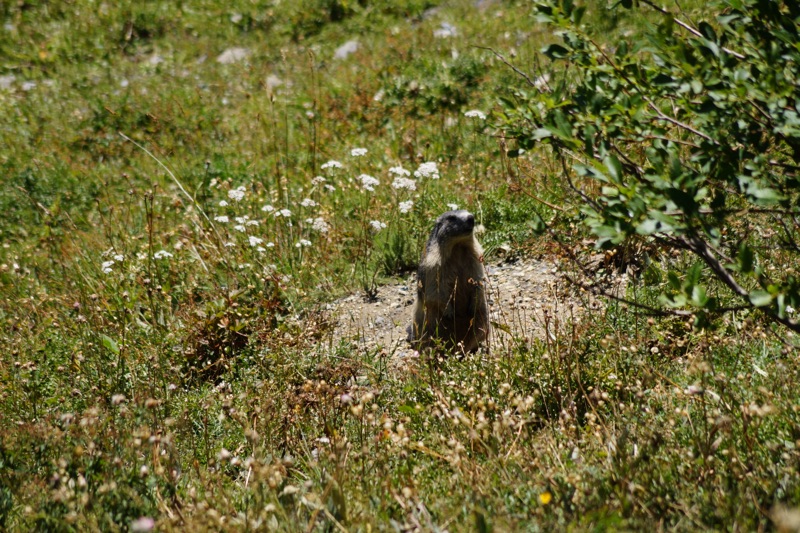
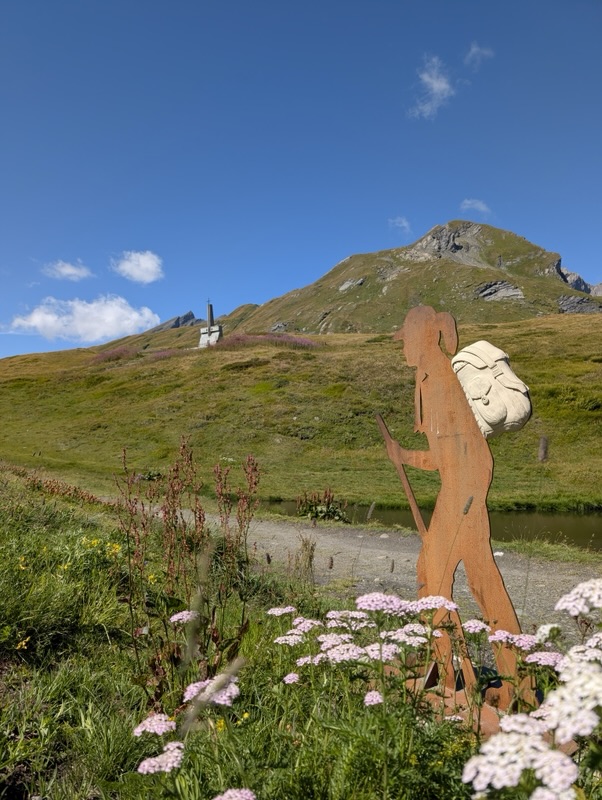
Es ist schon erstaunlich, wenn man sich vorstellt, wie viele Menschen diese Gegend über Jahrhunderte hinweg durchquert haben müssen. Zu Fuß, mit Lasttieren, in Kutschen oder später mit den ersten Automobilen. Und heute stehen wir hier mit unseren Bikes. Faszinierend. Fotos sind Pflicht, die Murmeltiere rennen wild umher und weiter unten ist genau der richtige Platz um eine Pause zu machen.
FRANKREICH RUFT. UND WIR HABEN ZEIT.
Auf der französischen Seite verändert sich der Charakter der Landschaft erneut. Die Straße führt hinunter in Richtung La Rosière und weiter nach Bourg-Saint-Maurice.
Die Berge bleiben unsere Begleiter, doch die Umgebung wirkt stellenweise anders. Wir verlassen die offene Passlandschaft und folgen der Straße hinab ins französische Tarentaise-Tal. Sein Reiz liegt einfach für uns in der gesamten Strecke, in den wechselnden Perspektiven und in diesem fließenden Übergang zwischen zwei Ländern, die zwar Nachbarn sind, aber ihren ganz eigenen Charakter besitzen.
UNSER FAZIT. DER KLEINE SANKT BERNHARD IST MEHR ALS NUR EIN GRENZÜBERGANG.
Der Kleine Sankt Bernhard ist unter Umständen nicht für jeden der spektakulärste Pass der Alpen, wenn man ausschließlich nach engen Kehren, dramatischen Felswänden oder maximalem fahrerischem Anspruch sucht.
Wir mögen ihn trotzdem, denn er verbindet nicht nur zwei Länder, sondern auch unterschiedliche Landschaften, Kulturen und Fahrgefühle. Und er bietet genau das, was ich an unseren Touren schätze. Eben eine Mischung aus Fahrspaß, Naturerlebnis und der Freiheit, unterwegs einfach einmal stehen zu bleiben.
In diesem Sinne #lifeisaride
Torsten & Carmen | TTMotorBikeBlog 🏍️❤️
PASSEPARTOUT: LITTLE ST BERNARD PASS
Coordinates: 45.680278° N, 6.883889° E
TWO COUNTRIES, ONE PERFECT DAY AND THE JOY OF THE OPEN ROAD. 🏍️☀️
There really are days when you climb onto your motorcycle in the morning and just know it’s going to be a good one. Not because you’ve planned some spectacular route on your sat nav. Not because there’s a mountain pass with a ridiculous number of hairpins waiting for you, either. But simply because the sun is shining, the air smells of summer and freedom, you’re sitting comfortably on your bike, and the Alps are stretching out before you.
That’s exactly the kind of day it is when we fire up our engines in Italy’s Aosta Valley that morning. Our bikes are ready, the sun is already doing its very best, and there’s absolutely no need to rush anywhere. Except, perhaps, to wherever the scenery is particularly beautiful. 😉
Our destination? The Little St Bernard Pass. One of the connections between Italy and France that has far more to offer than a sign displaying an altitude and a line marking the border.
So, welcome to another one of our unique mountain pass stories. Today, we’re taking you on a journey between Italian joie de vivre and the peaceful beauty of the French Alps.
THE AOSTA VALLEY. WHERE THE ALPS REALLY PUT ON A SHOW.
The Aosta Valley is our starting point, and it’s a region that motorcyclists should have on their radar far more often. Nestled among mighty peaks, including the Mont Blanc massif and the Monte Rosa range, it offers a backdrop that can make even the most seasoned Alpine rider occasionally forget to watch the road. Only for a moment, of course. We wouldn’t want this Passepartout story turning into an insurance claim, now would we? 😉
After just a few kilometres, the landscape begins to open up. Mountains and castles appear in our field of vision, and it feels as though there’s a new postcard waiting around every bend. One moment it’s a little village, the next a steep mountainside, followed by towering peaks that seem to grow effortlessly into the sky.
Then there’s the history of the region. Around Aosta, the regional capital, we encounter traces of Roman civilisation, ancient stone walls and, of course, castles that have watched over the valleys and trade routes for centuries. People were travelling, trading and fighting here long before we ever had the chance to explore the area on our motorcycles.
And as we gradually make our way up from the valley, this beautiful landscape slowly transforms into a genuine Alpine adventure.
THE LITTLE ST BERNARD PASS. HISTORY, MOUNTAIN VIEWS AND A SENSE OF FREEDOM.
Known in Italian as Colle del Piccolo San Bernardo and in French as Col du Petit-Saint-Bernard, the Little St Bernard Pass connects Italy’s Aosta Valley with the French Tarentaise Valley.
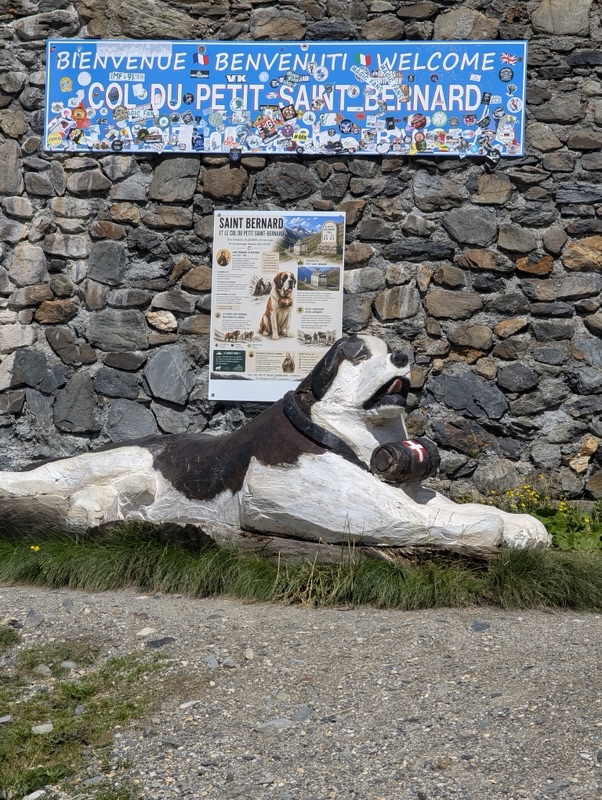
Its history stretches back a long way. As early as Roman times, this crossing was an important route through the Alps. Later, Saint Bernard of Menthon helped shape the history of Alpine crossings by establishing hospices intended to provide shelter for travellers. Although the story behind the pass’s name is a little more complex, the Little St Bernard still represents what Alpine crossings have always been about: bringing people, cultures and countries together.
And that’s exactly what we’re doing today, too. Just on two wheels and with considerably less luggage than a medieval trading caravan.
Although I have to admit that our motorcycle panniers occasionally contain things whose true purpose only becomes apparent after several hundred kilometres and at least two cappuccinos. Priorities, after all!
CLIMBING HIGHER. SUNSHINE, CURVES AND THE JOY OF RIDING.
At first, the road climbs gradually and steadily. Then, beyond Pré-Saint-Didier, it starts winding its way more steeply up the mountain. The boxer engine sings its familiar tune beneath me, the landscape begins to change, and with every metre of elevation, the views become just that little bit more impressive.
What I particularly like about the Little St Bernard Pass is its character. It doesn’t need an endless succession of tight hairpins to prove that it’s a proper Alpine pass. Of course, there are hairpins on the lower slopes, but higher up, the road opens out. There are flowing combinations of bends and longer sections where you can read the road beautifully and enjoy the rhythm of the ride.
But don’t forget: that certainly doesn’t mean you can switch off your concentration. Quite the opposite. The open road can tempt you to let your eyes wander across the scenery. And while the mountains put on their magnificent display, it’s worth remembering that a beautiful corner needs to be ridden first and admired afterwards.
We settle into the rhythm of the road, enjoying the combination of lean angle, engine and landscape. There’s no rush today, and certainly no competition to see who can conquer the pass in the shortest time.
AT THE TOP. AND SUDDENLY, THE WORLD FEELS SO MUCH BIGGER.
The summit sits at an altitude of around 2,188 metres. Up here, the border between Italy and France runs across the mountain landscape. On a map, it may look like an insignificant crossing. In reality, it makes quite an impression.
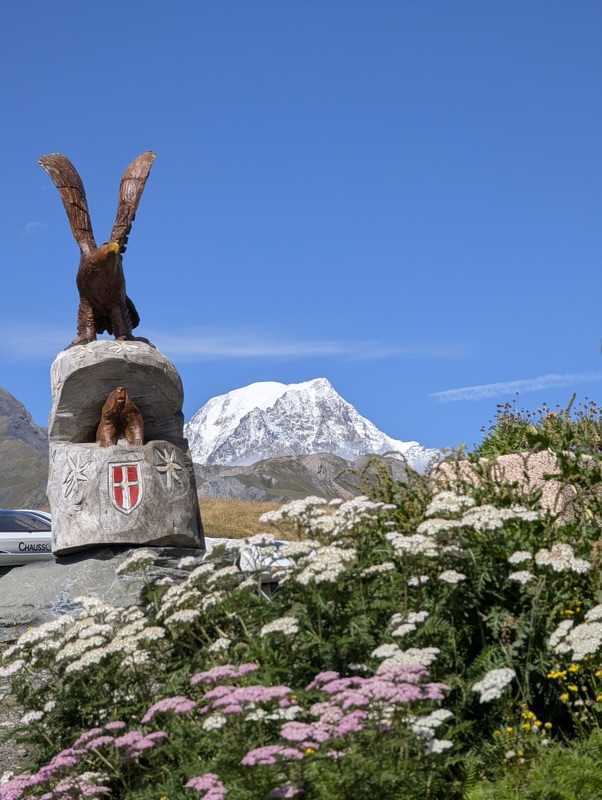
The landscape is wide open, the vegetation becomes lower, and the mountains reveal their wilder side. Meadows, slopes and summits stretch out around us, standing out in striking contrast against the deep blue sky.
On a sunny day like this, you almost want to stop time. And there’s certainly an invitation to slow down here, especially with the Chanousia Alpine Botanical Garden, one of the oldest botanical gardens of its kind, waiting to be explored.
We let our bikes cool down and take a moment to enjoy where we are.
The summit also preserves traces of this ancient Alpine crossing. Among them are the remains of a Roman sanctuary and other reminders of the long history of this place. The striking stone circle, known as the Cromlech, is another reminder that this crossing held special significance long before our time.
It’s quite something when you imagine how many people must have travelled through this landscape over the centuries. On foot, with pack animals, in carriages or, later, in the first automobiles.
And today, here we are, standing beside our bikes.
Fascinating, really.
Photos are, of course, compulsory. Marmots are darting around in every direction, and a little further down the road, we find just the right spot to stop for a break.
FRANCE IS CALLING. AND WE’RE IN NO HURRY.
On the French side, the character of the landscape changes once again. The road leads downhill towards La Rosière and continues to Bourg-Saint-Maurice.
The mountains remain our constant companions, but the surroundings begin to feel different in places. We leave the wide-open landscape of the high pass behind and follow the road down into the French Tarentaise Valley.
For us, the real appeal lies in the entire journey: the changing perspectives, the flowing road and that seamless transition between two neighbouring countries, each with its own distinctive character.
And that’s what makes this ride so special. It’s not simply about reaching the summit. It’s about everything that happens along the way.
OUR VERDICT. THE LITTLE ST BERNARD PASS IS MORE THAN JUST A BORDER CROSSING.
The Little St Bernard might not be the most spectacular Alpine pass for everyone, especially if your idea of the perfect ride revolves exclusively around tight hairpins, dramatic rock faces and the greatest possible riding challenge.
We love it anyway.
Because it doesn’t just connect two countries. It brings together different landscapes, cultures and riding experiences. And it offers exactly what I value most about our motorcycle tours: a wonderful blend of riding pleasure, natural beauty and the freedom to simply pull over whenever something catches your eye.
No rush. No pressure. Just us, our bikes and the open road.
And sometimes, that’s all you need for a perfect day in the Alps.
#lifeisaride
Torsten & Carmen | TTMotorBikeBlog 🏍️❤️